
Table of Contents
Revamping your kitchen boosts home value and daily comfort. This article explores practical, stylish kitchen makeover ideas for every budget — from planning and layout changes to material choices, lighting, appliances, storage and finishing touches.
Follow step-by-step guidance, cost ranges, sustainability options and small-space solutions so you can plan a confident, high-impact remodel that fits your lifestyle and timeline.
To expand your storage during your kitchen makeover, consider adding modern wall shelving. You can follow this easy guide on installing floating shelves
How to Set Priorities for Your Kitchen Makeover
- Define key objectives: Do you crave more prep space, modern style, or better energy efficiency? Prioritize needs—style upgrades, improved function, boosting resale value, or sustainable updates.
- Rank must-haves and willing-to-compromise features. For example, sustainability may be crucial if you plan to stay long-term, but resale-minded renovators should favor universal appeal.
How to Plan a Successful Kitchen Makeover
- Survey layout and workflows: Mark traffic jams, inadequate storage, dead zones.
- Inventory condition: Check cabinets, flooring, countertops, hardware for damage, wear, or obsolescence.
- Map out plumbing and electrical: Photograph and note water and gas lines, outlets, ventilation and breaker location to anticipate constraints or extra labor if you plan to move appliances.
- Accurate measuring: Measure wall-to-wall, ceiling height, key nook dimensions, and doorways. Sketch with measurements for reference in shopping and planning.
Kitchen Makeover Ideas for Any Budget
- Low Budget ($1,000–$5,000): Paint, cabinet hardware, light fixture update, peel-and-stick backsplash, faucet or sink upgrade. Labor: DIY or modest handyman fees. Materials: 60–70%, Labor: 20–30%, Appliances: 10–20%.
- Mid Range ($5,000–$25,000): Stock cabinets, new counters, tile, semi-custom work, mid-level appliances. Labor: 30–40%, Materials: 40–50%, Appliances: 15–25%.
- High-End ($25,000+): Custom cabinets, pro-grade appliances, luxury materials (quartz, hardwood), possible wall moves. Labor: 35–50%, Materials: 35–45%, Appliances: 20–30
Who to Hire for Your Kitchen Remodel
- Contractor/Designer: For mid to major jobs, design services can optimize space and budgeting efficiency. Hire contractors for structural, major cabinetry, or full kitchen renovations.
- Specialized Trades: Bring in licensed electricians and plumbers for any new circuits or relocated fixtures.
Permitting and Project Timeline Basics
- Permits: Required for plumbing, electrical, or major structural work. Cosmetic-only updates typically don’t need permits.
- Timelines: Cosmetic refresh: 1–4 weeks. Moderate remodel: 4–8 weeks. Major overhaul: 8–16 weeks, factoring material lead times and inspection scheduling.
Creating a Decision Matrix
- Analyze: Rank material and appliance options by cost, durability, and appearance side by side—e.g., laminate vs quartz counters; entry-level vs Energy Star appliances, solid brass vs coated hardware. Score and prioritize based on your main goal (value, longevity, style).
5-Step Planning Timeline Checklist (for 4–12 Weeks):
- Document current kitchen: sketch layout, measure, catalog constraints (Week 1)
- Set project goals, prioritize, and define budget tier (Week 1–2)
- Research/hire pros, select materials and appliances, refine decisions with your matrix (Week 2–4)
- Order products, finalize permits, schedule labor (Week 3–6)
- Prep for installation, plan for downtime, track progress (Week 4–12)
Reconfiguring layout and optimizing workflow
Reconfiguring your kitchen’s layout is one of the most impactful steps in any kitchen makeover, offering major functionality gains when done correctly. The right layout approach depends on your space, traffic flow, and overall makeover budget. As you plan your kitchen makeover, start by applying the classic work triangle principle, which positions the sink, stove, and refrigerator in a practical triangular arrangement.
Each leg of the triangle should be 4–9 feet, with a total distance of no more than 26 feet—an ideal setup that minimizes unnecessary steps during cooking and cleanup. This layout guideline is a simple but essential kitchen makeover strategy because it keeps all major tasks within easy reach while preventing congestion. For example, if your sink and stove sit too far apart, your kitchen makeover won’t feel efficient, and you’ll waste time moving back and forth.
In small or awkward kitchens, alternative layouts provide both space and flow:
- Galley (corridor): Two parallel runs with minimum 3–4 feet between for clear passage. Maximize counter space by placing the fridge or pantry at one end. For extra efficiency, cluster the sink and stove on one side, with prep space between.
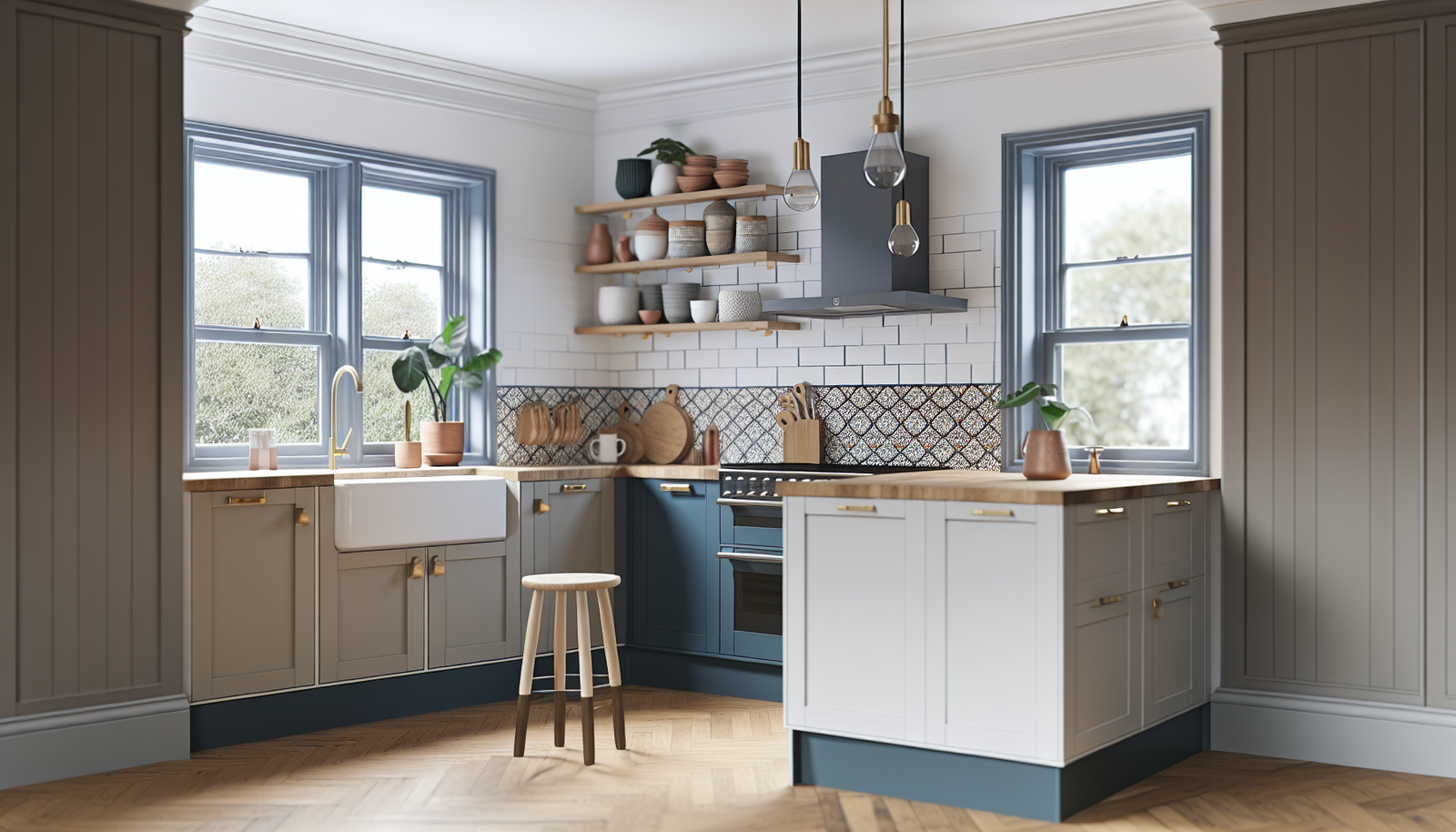
- L-shape with island: Good for open-plan homes. Place the prep sink and cooktop on both legs, and include an island (with at least 36″ clearance around, ideally 42–48″ for multiple cooks). The island can house prep, dining or storage.
- Single-wall with prep island: Ideal for long, narrow spaces, this centers all services in one line with an island opposite for chopping, serving, or seating.
If you’re considering moving plumbing or removing walls, weigh costs carefully. Relocating a sink or stove often runs $1,200–$3,500 each due to plumbing, venting, and electrical rerouting. Demolishing a non-load-bearing wall costs $1,500–$4,500, plus new flooring/patching. If structural or HVAC elements are involved, expenses rise steeply.
Step-by-step, optimize by:
- Mapping current traffic: Walk through “cooking day” steps.
- Measuring clearances: Aim for 42″ min aisle width (48″ if two cooks); leave 15” landing space alongside appliances.
- Positioning appliances: Avoid fridge blocking prep flow, and ensure oven doors or dishwashers can open fully with clearance.
- Allowing at least 36” run for uninterrupted countertop prep zones.
- Including ADA or aging-in-place: 60” turning radius and reachable counters/switches for wheelchair accessibility.
In narrow spaces, opt for pull-out storage and slim appliances to ease bottlenecks; in open plans, use islands/peninsulas as subtle zone dividers while maintaining open sightlines.
Case Study: With a $9,000 budget, one homeowner removed a partial wall separating a galley kitchen from the dining area, replaced upper cabinets with open shelving, and added a 4’ x 2’ island (42” clearance all sides). Timeline: 5 weeks. The result: improved sightlines, easier multi-tasking, and a more sociable space.
Common mistakes include crowding appliances (e.g., fridge beside oven), insufficient prep zones, and traffic bottlenecks by sinks. When major moves aren’t possible, optimize workflow by reordering portable carts, relocating small appliances, or adding compact prep tables to enhance usability within your limits.
Cabinets countertops and backsplash choices
Cabinetry choices can dramatically refresh a kitchen without full replacement. Full cabinet replacement offers unlimited style and reconfiguration options using materials like solid wood (durable, classic, $250–$500/linear ft), plywood (stable, cost-effective, $200–$400/linear ft), or MDF (smooth finish, budget, $180–$350/linear ft).
Thermofoil (vinyl over MDF, $150–$250/linear ft) is affordable but less heat- and moisture-resistant. For budget-friendly makeovers, cabinet refacing (replacing doors/veneers, $80–$150/linear ft) or repainting (labor-heavy, $35–$70/linear ft) yield dramatic updates.
Repainting is best for sound, wood-based frames. New hardware—pulls, knobs, soft-close hinges—modernizes even dated cabinets, with lifespans 10-30 years depending on material and handling.
Countertops fundamentally affect both style and function. Laminate ($25–$50/sq ft) resists stains but scratches easily and can’t handle hot pans. Butcher block ($40–$90/sq ft) adds warmth; it needs regular oiling and may stain but repairs well.
Quartz ($60–$120/sq ft) is non-porous, resist scratches/stains, low-maintenance, and available with recycled content.
Granite ($50–$120/sq ft) is heat-resistant, durable, but needs periodic sealing. Concrete ($70–$140/sq ft) can be cast to any shape, but may crack or stain without sealing—sustainability depends on aggregate and cement source.
Solid surface like Corian ($65–$120/sq ft) is seamless and repairable, moderate stain/scratch resistance, low-maintenance.
Backsplash options blend protection and personality. Classic subway tile is timeless, easy to clean, mid-level DIY install ($10–$30/sq ft). Large-format porcelain tiles mean fewer grout lines, easy wipe-downs ($20–$45/sq ft, pro installation favored).
Glass tile reflects light, resists stains, can scratch when cleaning ($25–$55/sq ft). Metal sheets or tiles are modern, ultra-durable, but prone to fingerprints ($20–$50/sq ft). Peel-and-stick backsplashes are renter-friendly, low commitment, but limited lifespan and heat resistance ($6–$20/sq ft).
Decision framework for combining finishes:
- For modern/minimalist: choose slab-front cabinets, solid color quartz or concrete, large porcelain tiles or glass backsplash.
- For farmhouse: Shaker cabinets in wood or paint, butcher block or honed granite tops, classic subway tile backsplash.
- Avoid mixing more than 2 patterns; vary tone, not just texture.
Budget checklist:
- Include: all surface materials, edge treatments, hardware, trim pieces, sealers, professional installation (as needed).
- Exclude: appliance upgrades, rewiring, structural work (address separately).
Lighting appliances and energy efficiency
Thoughtful lighting and efficient appliances are essential to a high-performance, beautiful kitchen upgrade. Layered lighting design enhances both form and function:
- Ambient: General illumination with recessed LED cans (2–4″ diameter) spaced 4 feet apart or high-CRI ceiling fixtures (CRI 90+; 30+ lumens per square foot).
- Task: Focused lighting over counters, sink, and cooktop—use undercabinet LED strips (400–800 lumens/foot, 3000–4000K) or directional track lights aimed at prep zones.
- Accent: Pendants over islands, LED cabinet toe kicks, or spotlights highlight decor and architecture.
- Fixture placement: Place undercabinet strips at the cabinet face; pendants should hang 30–36″ above islands; position recessed cans to minimize shadows.
- DIY wiring tips: Only attempt fixture swaps or plug-in undercabinet lights if circuits are accessible and shut off power at the breaker. For new runs, multiple zones or panel upgrades, hire a licensed electrician for safety and code compliance.
With appliances, weigh performance, features, and energy savings against upfront cost.
- ENERGY STAR appliances use 10–50% less energy and water; most utilities offer rebates ($50–$300 per appliance).
- Induction cooktops are 10%–20% more efficient than gas; faster and easier to clean but require compatible cookware. Midrange induction: $900–$2,000 installed. Gas: $700–$1,800 plus venting ($300–$1,500).
- Prioritize: Refrigerator, dishwasher, range, ventilation hood (minimum 150–350 CFM, vented outside for gas/induction installs).
- ROI: Upgrading aging appliances and fixtures can save $300–$500 per year on utilities with smart controls (Wi-Fi-enabled thermostats, dimmers, bulbs), increasing lifespan by 2–4 years versus standard options.
- Budget upgrades:
- Entry: Change bulbs to LED, add plug-in strip lights, install outlet timers.
- Mid: Replace dishwasher or refrigerator, add smart dimmers.
- Premium: Replace all appliances, add hardwired undercabinet LEDs, multi-zone smart controls.
- Maintenance: Clean appliance coils and filters quarterly, test GFCI outlets, replace bulbs yearly, and inspect fixture wiring every 3–5 years to maximize efficiency and safety.
Finishing touches storage and long term maintenance
Finishing touches bring cohesion and value to a smart kitchen makeover. Precision in hardware and trim selections instantly elevates cabinets and counters: matte black or brushed brass pulls create visual impact, while subtle crown molding or baseboard trim gives a polished edge.
For durability, choose cabinet paints and sealants specifically rated for kitchens—look for low-VOC, scuff-resistant finishes, and waterproof sealers on high-traffic surfaces.
When choosing sinks and faucets, opt for deep basins and pull-down sprayers if you cook frequently, or smaller, minimal styles in compact kitchens; always match the finish (chrome, black, or brass) to your hardware for a unified look.
Smart storage multiplies convenience:
- Pull-out pantries maximize narrow spaces and keep staples visible.
- Vertical dividers organize baking sheets, trays, and cutting boards upright for easy access in lower cabinets.
- Deep drawer organizers transform chaos into zones for utensils, spices, and pots.
- Corner solutions—like rotating lazy Susans or pull-out blind corner units—convert dead space into useful storage.
- Open shelving: visually expands small kitchens but requires routine decluttering; only display attractive or daily-use items.
For long-term care, set up a maintenance schedule:
- Monthly: Wipe hardware, check for loose handles, clean backsplashes and cabinet fronts.
- Seasonal: Inspect caulk, grout, and sealants; check for leaks at sink and faucet bases; reorganize drawers and shelves.
- Stain removal: Use baking soda paste on stone, diluted vinegar on metal, or specialized cleaners for tough marks.
- Refinishing: Repaint or reseal wood surfaces every 2-5 years or as needed; replace chipped hardware to maintain value.
For final staging, use:
- Fresh flowers or a bowl of fruit to add color.
- Matching counter canisters or trays for a clean look.
- Remove excess appliances to boost spaciousness.
Downloadable Quick Pack List for Easy Staging:
- Surface cleaner, microfiber cloths, spare bulbs, matching towels, fresh herbs, minimalist décor items.
Two-Month Post-Project Checklist:
- Test cabinet hinges and drawer glides for adjustment.
- Monitor for grout cracking or finish wear; capture issues with photos for warranty claims.
Document the project with before/after photos and receipts—essential for resale value and future maintenance records. Smart finishing and organization deliver daily delight and long-term ROI.
Conclusions
With the right plan and smart choices, a kitchen makeover can deliver major aesthetic and functional upgrades without overspending. As you plan your kitchen makeover, review layout improvements, compare materials, update lighting, and optimize storage options. Make sure to weigh costs, ROI, and energy-efficient features so your kitchen makeover stays affordable and durable.
Use the checklists and timelines provided to keep your kitchen makeover on budget and on schedule. A thoughtful, well-organized kitchen makeover ensures a beautiful, practical kitchen that adds long-term value and daily enjoyment.