
Table of Contents
Bathroom wall panels and shower panels offer a fast, waterproof, and stylish alternative to tiles. This article explores materials, design options, installation best practices, cost considerations and maintenance tips so homeowners and professionals can choose the right panels for showers, wet rooms and full bathroom upgrades.
Why wall panels are the modern choice for bathrooms
Bathroom wall panels—also known as shower panels or wet room panels—are prefabricated wall coverings specifically engineered for use in moist, splash-prone environments. Unlike traditional tile, which is installed piece-by-piece, these panels come in large sections or sheets and are designed for quick coverage of shower enclosures, full wet rooms, tub surrounds, and sometimes accent or partial walls in bathrooms.
Main advantages of bathroom wall panels over tiling include:
- Superior waterproofing: Panels are inherently water-resistant and, when correctly installed, form an almost impermeable barrier, greatly reducing the risk of leaks compared to grout lines in tile work.
- Fast and disruption-free installation: Large-format panels minimize joint lines and can be installed in a fraction of the time, often in a single day, speeding up bathroom projects with less mess and fewer specialist tools.
- Seamless joins: Many panel systems offer interlocking or tongue-and-groove edges, producing a sleek, seamless finish with minimal visible joins or silicone lines—ideal for a modern minimal look.
- Low maintenance: With no grout to discolor or crack, panels simply need wiping down to stay clean. This reduces scrubbing and prolongs their appearance.
- Hygienic surfaces: Smooth, non-porous finishes resist mold and bacteria growth, making them perfect for family bathrooms and busy shower spaces.
- Thermal and acoustic insulation: Some panel materials add comfort by insulating against cold external walls and reducing water noise in the shower.
- Wide design choices: Panels come in a range of textures and realistic finishes, from high-gloss marble effect to industrial concrete, allowing personal design without the limits of tile sizes.
Potential drawbacks and how they can be managed:
- Upfront cost can be higher than basic tiles, but savings in labor and long-term upkeep often outweigh this for many homeowners.
- Repairability: Replacing a damaged panel may mean dismantling a larger area than a single broken tile; using brands with efficient modular systems can reduce this issue.
- Expansion gaps and movement: Panels expand and contract with temperature and humidity changes, so careful allowance at edges and good-quality trims are essential.
- Ventilation: As wall panels form a vapor-tight barrier, ensuring adequate bathroom ventilation is key to preventing mold elsewhere—something to address at installation.
Bathroom wall panels are a stylish and practical choice, especially for DIY enthusiasts. Many systems are designed for easy gluing or click-in installation, making them perfect for straightforward projects. However, cutting bathroom wall panels to fit around plumbing or uneven walls requires precision. For more complex layouts, larger bathrooms, or to guarantee complete waterproofing, hiring professional fitters for your bathroom wall panels is recommended. The next chapter will cover essential practicalities for installing bathroom wall panels, including wall preparation, substrate type, overall flatness, and managing service penetrations.
To decide if panels are right for your bathroom:
- If you want minimal grout and less cleaning, panels are a smart alternative.
- For fast renovations or rental properties, the quick installation and robust surfaces are often worth the cost.
- In very damp spaces like wet rooms, panels offer superior protection compared to traditional tiles and grout.
- If budget or preservation of historic features is key, consider panel costs versus simple tiling but factor in total lifecycle maintenance.
Understanding how panels differ by material, finish, and technical performance is essential—the following chapter explores the full range of panel types and how to pick the best one for your design and practical needs.
Materials finishes and technical characteristics
Building on the advantages discussed earlier, selecting the right bathroom wall panels and finishes is key to unlocking their full benefits. With a wide range of bathroom wall panels available on the market, understanding how each material performs in wet, humid spaces will help you choose panels that suit your needs, budget, and design vision. Below, we outline actionable criteria and technical details for the most popular bathroom wall panels and shower panel materials:
PVC and Vinyl Panels
- Typical Thickness: 6–10mm
- Waterproof Performance: 100% water-impermeable
- Common Finishes: high-gloss, matt, stone look, marble patterns, tile-effect, woodgrain
- Advantages: lightweight, affordable, very low maintenance, easy to cut/fit, mold resistant
- Drawbacks: not as premium in feel, susceptible to scratches, visible joints if not installed perfectly flat
- Typical Lifespan: 10–15 years
- Best for: rapid shower surrounds, ceilings, budget wet rooms, rental units
Acrylic Panels
- Typical Thickness: 4–8mm
- Waterproof Performance: non-porous, seamless if back-painted
- Common Finishes: glass-effect gloss, solid colors (RAL), digital print
- Advantages: striking visual depth, impact-resistant, luxurious look, no grout lines
- Drawbacks: more expensive than PVC, needs care to prevent abrasive scratching
- Typical Lifespan: 10–20 years
- Best for: statement shower walls, minimalist wet rooms, feature areas
High Pressure Laminate (HPL) Panels
- Typical Thickness: 10–13mm with waterproof core
- Waterproof Performance: good (when edges properly sealed)
- Common Finishes: matte, stone replication, solid colors, real wood laminates
- Advantages: tactile surfaces, robust, wide décor range, warm to touch
- Drawbacks: core must be moisture-resistant, more seams, heavier to handle
- Typical Lifespan: 10–20 years
- Best for: family bathrooms, full wet rooms, accent contrast walls
Compact Solid Surface/Composite Panels (mineral, resin-bonded)
- Typical Thickness: 3–12mm
- Waterproof Performance: completely non-porous through-body
- Common Finishes: satin, matt, stone look, seamless joints
- Advantages: repairable surface, ultimate hygiene, invisible joins possible, luxury appeal
- Drawbacks: expensive, professional cutting/edge polishing needed
- Typical Lifespan: 25+ years
- Best for: high-end wet rooms, spa bathrooms, seamless alcoves
Engineered Stone Panels / Thin Natural Stone Veneers
- Typical Thickness: 2–8mm (engineered), 2–5mm (veneer on backer)
- Waterproof Performance: very high, with sealed joins
- Common Finishes: natural marble, slate, quartz, travertine
- Advantages: authentic stone appearance, unique veining, luxury impression
- Drawbacks: fragile when handling, high cost, must ensure waterproof backing
- Typical Lifespan: 20–30 years
- Best for: luxury shower enclosures, full-wall features, accent zones
Aluminium or Metal Panels
- Typical Thickness: 1.5–3mm (sometimes composite-backed)
- Waterproof Performance: outstanding if seam-sealed
- Common Finishes: brushed, anodized, mirrored
- Advantages: industrial or modern look, fully recyclable, mold-proof
- Drawbacks: cold to touch, needs careful trimming, can show fingerprints
- Typical Lifespan: 20+ years
- Best for: feature panels, minimalist wet rooms
Seams, Joint Systems and Profiles
- Tongue-and-groove and click-fit reduce visible gaps and offer a water-shedding profile; ideal for rapid-fit PVC/HPL systems.
- Butt-jointed (with glue or silicone): gives minimal joint lines—best for solid surface and acrylic.
- Decorative trims and aluminum profiles: required at panel ends, corners, and around fixtures for waterproofing and neat finish.
Technical Considerations
- Expansion Gaps: Always leave 2–5mm at perimeters—especially with PVC, acrylic, laminate.
- Thermal Movement: Most plastics expand/contract with heat—avoid tight fixing.
- Substrate Flatness: Surfaces should not vary more than 2–3mm per linear meter; panels must lay perfectly flat.
- Fire Ratings: Check panel certifications—some plastics are Class 1 surface spread of flame, but not all suit high-risk areas.
- Slip Resistance: For any low panels near floors, select textured finishes if splashing is likely.
Choosing the Right Panel: A Quick Checklist
- Budget-driven project: PVC or vinyl
- Visual luxury focus: acrylic, engineered stone, solid surface
- Max durability/wet area exposure: solid surface, HPL
- Sustainability concerns: look for recycled-content PVC, FSC-certified HPL, or metal panels
Material selection directly impacts the installation approach and waterproofing method. The next section will walk through step-by-step fitting and sealing details for each major panel, to ensure lasting, watertight performance.
Waterproofing and step by step installation best practices
The long-term performance and watertightness of bathroom wall panels and shower panels rely on careful installation and strict attention to waterproofing details. Improper preparation or inadequate sealing can cause problems such as water penetration, swelling, mold growth, and expensive repairs. The choice of bathroom wall panels material—from flexible PVC to rigid acrylic or solid surface—directly affects substrate and adhesive requirements. Reviewing the technical data for your bathroom wall panels is essential before starting any installation project.
- Site inspection and preparation:
Check for any moisture, existing leaks, or structural movement. Use a moisture meter if needed. Remove old wall coverings and loose material; walls must be stable and clean. Recommended tools: scraper, utility knife, vacuum. - Substrate assessment and correction:
Verify surface is flat (no more than 2mm deviation per meter), plumb, and secure. Fill dips and sand high spots. Suitable backings: cement board (ideal for wet zones), exterior-grade plywood (where permitted), or even sound, degreased existing tiles. Avoid drywall in direct wet areas. Tools: spirit level, long straight edge, patch filler, sander. - Waterproofing layer:
For shower zones, use a liquid-applied waterproof membrane or waterproof backer tape on seams and corners. Allow full drying per product instructions (often 24 hours, ensure ventilation). Pay special attention to wall/floor junctions and around niches. For certain solid surface or dense acrylic panels, primer may be needed for adhesion—check manufacturer advice. - Panel dry-fitting and expansion provision:
Measure and cut panels with a fine-tooth saw or blade (specifics depend on PVC vs composite vs HPL). Test fit each panel. Always leave a 3–5mm expansion gap at all junctions, around pipes, and at the floor/ceiling—never butt panels tight. For tongue-and-groove or click profiles, follow alignment guidelines for best joint compression. Use spacers to maintain gaps. - Applying adhesive and fixing panels:
Use high-quality panel adhesive in continuous horizontal beads, plus dabs every 30–40cm. Position panels, then press firmly and brace if needed. For butt-jointed or glued systems, run a bead of sanitary silicone or approved wet-room joint sealant along edges before joining. For mechanical or click profiles, ensure full engagement and watertight seating. Tools: caulk gun, notched trowel, clamps (for some composites). - Joining, trimming, and sealing:
Apply waterproof tape at all critical seams. Use matching or contrasting trims for external and internal corners. Cut trims to length and dry-fit before gluing in place. Seal all transitions (base, ceiling, window reveals, around pipes and fixtures) with non-shrink sanitary silicone, tooling smooth for full coverage. Around valves, taps, and penetrations, oversize the cut hole, insert a back-ring collar (if supplied), and always apply silicone before inserting the panel. For wall niches, line all edges with waterproof tape before panel adhesion. - Final checks and safety:
Inspect all seams, corners, and penetrations. Remove excess sealant; repair or reapply where needed. Ensure prescribed cure times (typically 24–48 hours) for adhesives and silicone before using the shower. Provide adequate ventilation for drying. If your job involves electrical connections (e.g., LED niche lighting), follow local code and consult a qualified electrician. Always check local building regulations for bathroom wet area assembly, especially if plywood substrates or composite adhesives are used.
Special instructions:
- PVC panels can flex; ensure substrate is especially flat and adhesive is evenly distributed.
- Acrylic and solid surface panels are heavier—mechanical fixings may be required at the top edge.
- Engineered stone and compact panels need joint gaps strictly observed (5mm at corners) and joint sealant compatible with mineral surfaces.
- For mechanical locking systems, tap panels gently into place; never force fit or cut into the profile, as it will compromise watertightness.
Common troubleshooting:
- Seams leaking: Re-caulk with sanitary silicone, check for missed spots behind trims.
- Panel not adhering: Remove, reapply adhesive, and confirm substrate free from dust or soap residue.
- Gaps too large: Fill with backer rod and silicone; replace panel if expansion gap exceeds 8mm.
- Mold at edges: Improve ventilation, replace failed sealant, check for hidden leaks.
With careful waterproofing and precision at every stage, your panels will deliver lasting, low-hassle performance. Next, we’ll detail how to keep your new wall panels clean, hygienic, and trouble-free throughout their lifecycle, helping you understand their true value over time.
Design combinations and planning a stylish shower area
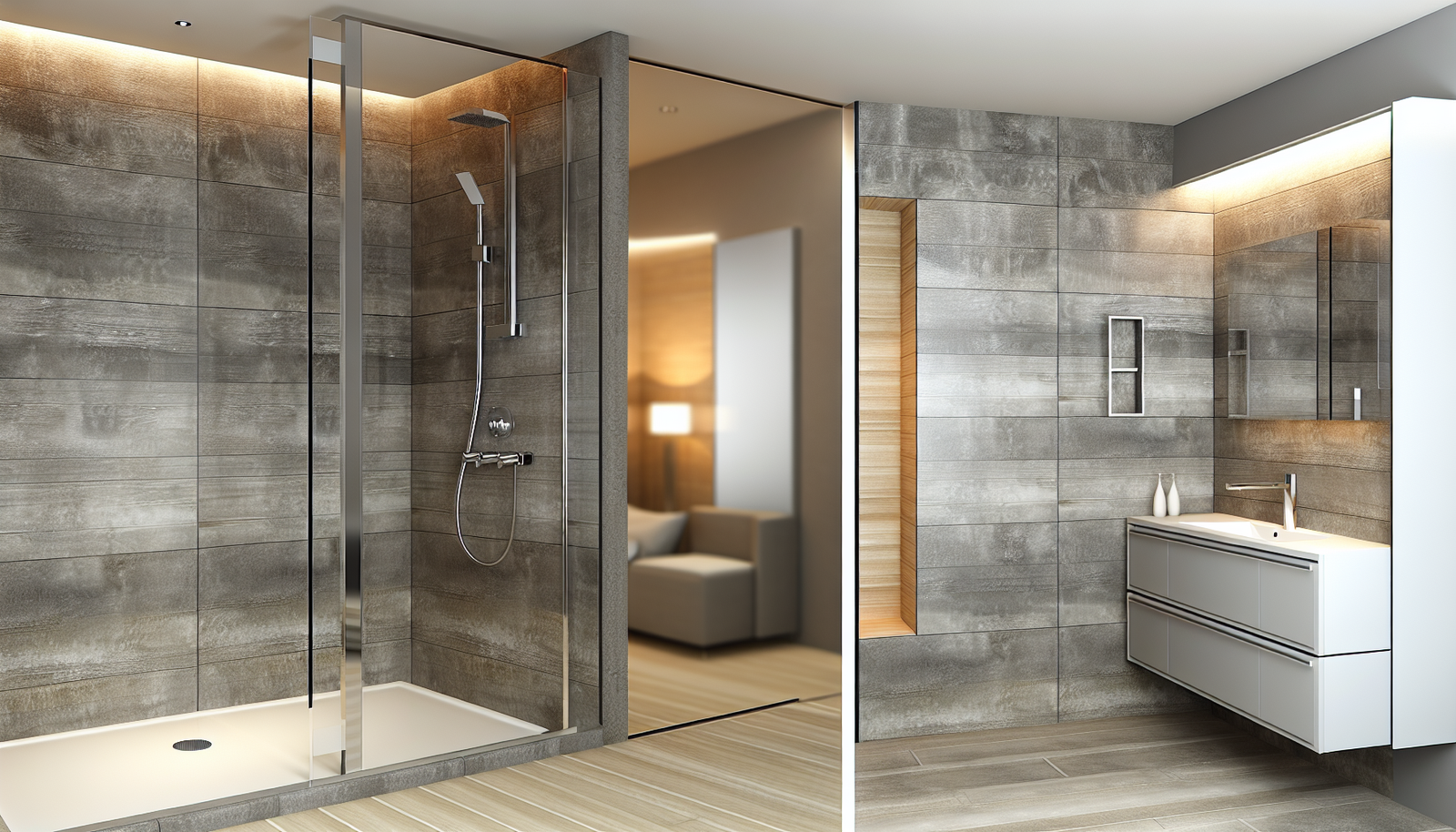
Material properties open the door to creative design—large-format stone-effect bathroom wall panels create a seamless, almost monolithic look, perfect for open-plan wet rooms, while compact textured waterproof panels add warmth and character in feature niches and alcoves. Careful pairing of these elements enables both practical function and bold style.
Designing with Panels: Practical Rules and Visual Tips
- Mixing Finishes: Blend matte with gloss, or stone with wood-effects to add depth without overwhelming the space. For instance, use matt marble in the main area and introduce smooth, high-gloss panels in niches for contrast.
- Accent Walls: Use bolder colors or patterns (like geometric or metallic) as accent panels behind vanities or inside showers. Restrict statement panels to one wall or zone for impact.
- Joints and Alignments: Align joints with door frames, vanities, or window lines for architectural coherence. For minimal visual noise, select large-format panels to minimize seams, and run horizontal joints at the same height as backsplashes or shower doors.
- Flooring and Fixtures: Match panel tones with flooring (matte stone with anti-slip porcelain, wood with vinyl) and coordinate panel profiles with fixture finishes, especially taps and shower frames in chrome or black.
Shower Zone Planning
- Half-height panels with a tiled splash create vintage-modern looks and make repairs easier. Full-height, end-to-end panels deliver a hygienic, hotel-style seamlessness and are ideal for wet rooms.
- Panel Configurations: Two-wall panels work for in-line shower trays, while corner and three-wall options suit alcoves or walk-in showers. Your choice determines compatible shower screens: frameless glass suits seamless panels, while chunkier framed doors can echo panel joint lines.
Lighting, Effects & Perception
- Gloss vs Matte: Gloss panels amplify light—ideal for small or windowless rooms, while matte finishes absorb glare, creating a spa feel.
- Contrasts: Use a darker panel next to white sanitaryware for drama, or select light grout/trim to emphasize sleek panel lines. Emphasize architectural features by running LED strips in rebated niches or under floating benches—ensuring IP-rated fittings and compatible, heat-tolerant panels are specified.
Accessibility & Practical Features
- Low-threshold or level-access wet rooms use continuous panels from floor to wall. Specify anti-slip flooring that visually coordinates with wall panels.
- Integrate benches by recessing solid-surface panels, adding contrasting or slip-resistant sections. Pre-plan gaps for secure grab bar or seat fixings—reinforce behind panels during substrate prep (see previous chapter).
Sustainability & Sourcing
- Seek panels with recycled content and low-VOC certification. Compact laminate and acrylic panels often offer better life-cycle impacts than single-use PVC. Prioritize formats and colors that won’t date quickly.
- Choose suppliers offering take-back recycling or published environmental product declarations, favoring those who validate panel durability.
Design Brief Checklist for Consultation:
- Panel material, thickness and finish
- Preferred color/texture combination and joint layout
- Accent or feature wall specification
- Compatibility with flooring and fixtures
- Shower area layout (height, number of walls, door/screen style)
- Lighting and electrical plan in wet zones
- Accessibility features and fixing requirements
- Sustainability preferences and sourcing restrictions
Maintenance longevity and cost considerations
Keeping your bathroom wall panels—and shower panels—in optimal shape requires a thoughtful but manageable routine. A little care goes a long way toward maximizing their stunning looks and practical benefits.
- Maintenance schedule:
- Daily: Quick wipe-down with a soft, damp microfiber cloth after showers or heavy use keeps soap scum and watermarks at bay.
- Weekly: Use a non-abrasive, pH-neutral cleaner suitable for your panel’s material. Avoid harsh chemicals, bleach, or abrasive pads—especially for acrylic and laminate surfacing.
- Annually: Inspect panel joins and silicone seals; look for cracks, discoloration, or movement. Reseal where needed to prevent hidden water ingress.
- Cleaning by material:
- PVC & acrylic: Only soft cloths/sponges, diluted mild soap, and water. Avoid solvents or strong disinfectants.
- Composite & stone-effect: Commercial bathroom cleaner (pH-neutral). Never use acidic descalers on faux-stone finishes.
- Laminates: Same as above; always dry panels thoroughly after cleaning to avoid edge delamination.
- Common repairs:
- Replacing or topping up silicone: Cut away old bead, clean thoroughly, and apply a mold-resistant sanitary silicone.
- Acrylic scratch repairs: Fine scratches may buff out using a specialty acrylic polishing kit; deeper gouges often require panel replacement.
- Panel replacement: Remove screws or snap fittings as designed; consider a professional for large panels to ensure watertight reinstatement and matching patterns.
- Seek professionals if structural water damage, mold, or panel warping is present.
- Lifespan expectations:
- PVC and acrylic panels: 8–15 years with good ventilation and regular care.
- Composite and laminated panels: 10–20+ years. Lifespan depends on installation quality, fixing method, continuous ventilation, and water hardness.
- Cost considerations:
- Materials: Economy (PVC) £40–60/m²; Mid-range (laminate, acrylic) £80–120/m²; Premium (composite, stone) £200+/m².
- Install labor: £300–£800 per full bathroom, depending on prep and complexity.
- Lifecycle costs vs tile: Panels save on grout, ongoing resealing, and deep cleaning; fewer mold issues mean fewer interventions.
- Sample scenarios:
- Economy: Functional PVC, basic trims; DIY possible.
- Mid-range: Acrylic/laminate, decorative joints, anti-mold trims; pro install recommended.
- Premium: Fully watertight composite/stone effect, seamless joins, bespoke trims, and integrated lighting; professional install essential.
- Warranty and certification checklist:
- Minimum 5–10 year manufacturer warranty on panels.
- Tested slip-resistance (especially for shower floors/pan boards).
- Fire safety compliance (fire rating certificates as required by local code).
- Explicit waterproofing or water resistance guarantee.
- Actionable buyer checklist:
- What panel core and surfacing material is used?
- What are the cleaning and care requirements?
- What installation method is supplied or recommended—mechanical, adhesive, or hybrid?
- Is the system compatible with my bathroom’s vapor/ventilation conditions?
- Are trims, sealants, and fixings included and certified?
- What after-sales support and warranty apply to panels and accessories?
- Who handles repairs and parts if something goes wrong years later?
- Can you provide references or case studies from past installations?
By weighing lifecycle costs, maintenance realities, and service support alongside your design and installation choices, you can select bathroom wall panels and shower panels that truly stand the test of time—and daily use—in your home.
Conclusions
Bathroom wall panels and shower panels offer excellent waterproof performance, quick installation, and a wide range of aesthetic options, making them a strong alternative to traditional tiles. By selecting the right bathroom wall panels, following proper waterproofing and installation techniques, and committing to simple maintenance, homeowners can enjoy durable, attractive shower and bathroom finishes. Well-chosen bathroom wall panels deliver style and longevity while fitting a variety of budgets and design preferences.
For more inspiration on enhancing your bathroom or other rooms, check out these creative wall decor ideas to complement your bathroom wall panels.