
Table of Contents
Choosing the right area rug transforms a room. This guide explains rug and bed dimensions, how rugs should sit under beds, recommended sizes for full, queen and king beds, and common living room rug choices like 8×10 and 9×12. Learn measurement rules, placement options and styling tips so your rug looks intentional and fits your space.
Essential rug and bed dimensions you must know
Knowing the exact dimensions of both beds and area rugs is essential for achieving a harmonious look and comfortable function in any bedroom or living room. Below are precise mattress and rug sizes, with both imperial and metric conversions, to help you choose the right rug for king, queen, or full beds, and for various living spaces.
Standard Mattress Sizes:
- Full size bed: 54 x 75 inches (137 x 191 cm) – Ideal for single sleepers or guest rooms.
- Queen bed: 60 x 80 inches (152 x 203 cm) – The most popular size for couples or master bedrooms.
- Standard king bed: 76 x 80 inches (193 x 203 cm) – Perfect for those seeking luxury and space.
Popular Area Rug Sizes:
- 5 x 8 feet (152 x 244 cm)
- 6 x 9 feet (183 x 274 cm)
- 8 x 10 rug: 244 x 305 cm
- 9 x 12 feet (274 x 366 cm)
- 10 x 14 feet (305 x 427 cm)
- Typical living room sizes: 12 x 18 feet (366 x 549 cm) to 16 x 20 feet (488 x 610 cm).
Why accurate rug size matters: The right area rug size ensures a balanced, anchored look. Rugs that are too small feel disconnected and visually shrink a space, while oversized rugs may overwhelm the room.
Measurement Examples for Rug Extension:
- 18 in = 46 cm: Minimum recommended rug overhang beyond the sides of a bed, gives a tidy proportion.
- 24 in = 61 cm: Classic extension, allowing you to step onto the soft rug when getting out of bed.
- 30 in = 76 cm: Luxurious and dramatic for large bedrooms, making the rug a main design feature.
Visually, a 24-inch (61 cm) rug border creates symmetry around the bed and feels both generous and practical for everyday use.
Mattress vs Area Rug Size Pairings:
- Full size bed – 5×8 or 6×9 rug
- Queen bed – 8×10 rug (rug size for queen bed)
- King bed – 9×12 or 10×14 rug (king bed rug size)
A properly measured area rug supports both furniture arrangement and the flow of your bedroom or living room, elevating your style and comfort.
How to place a rug under a bed for best proportion
Choosing the right rug under bed can completely transform a bedroom’s vibe—but placement is equally critical for proper proportion. There are two main layout approaches: full-under and partial-under.
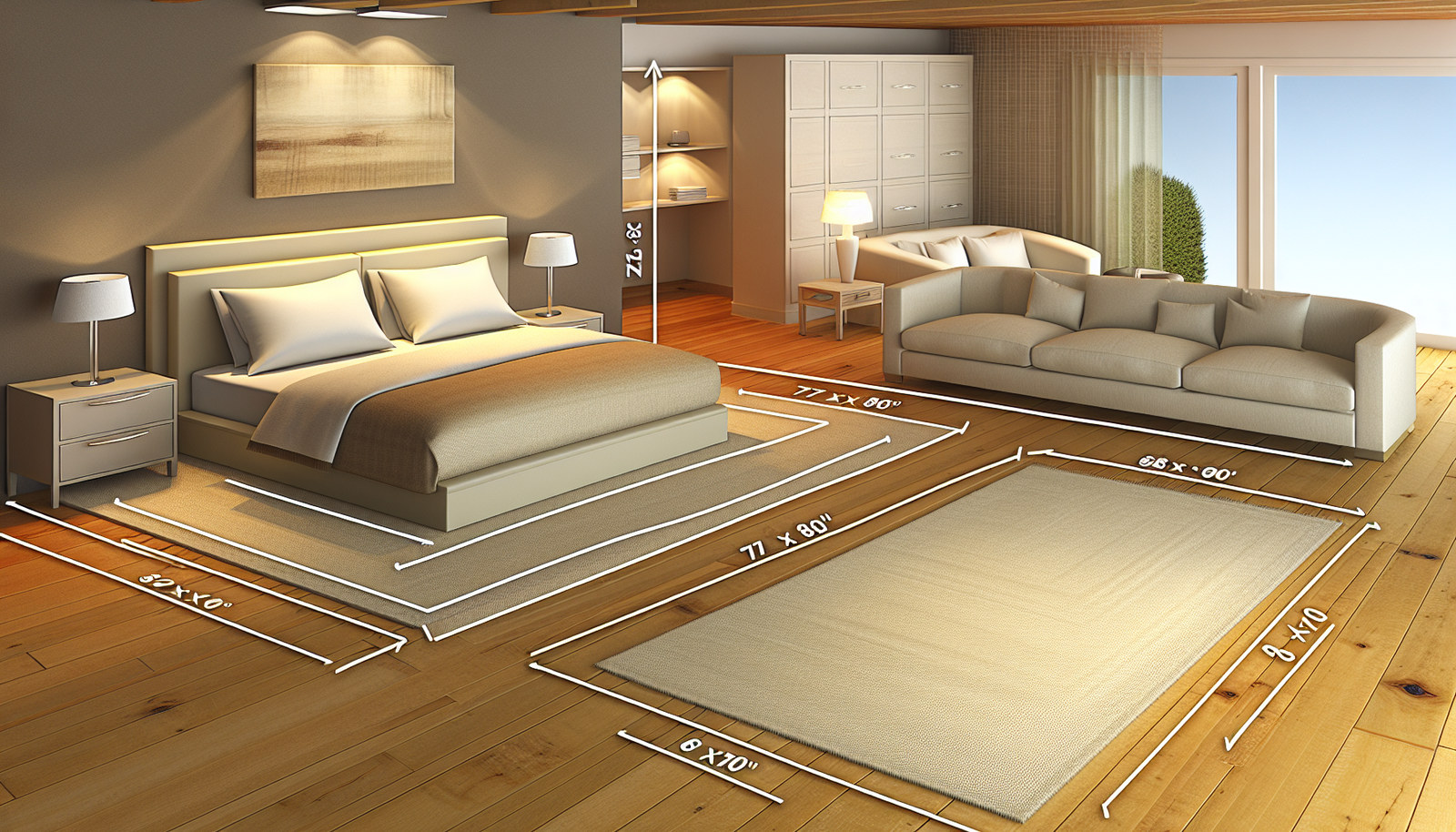
Full-under layout means the area rug is large enough to support both the bed and the nightstands, extending beyond on all sides for a unified look. For this configuration, aim for the rug to reach at least 6–12 inches (15–30 cm) from the wall behind the nightstands, and allow the rug to extend a minimum of 18–24 inches (46–61 cm) at each side and foot of the bed. This is particularly effective with a large bedroom rug size, like a 9×12 or 10×14 rug under a king bed, and is best in larger rooms where full coverage grounds all furniture in a visually cohesive way.
- Pros: Luxurious hotel-like feel, softness underfoot everywhere
- Cons: Requires a big rug and ample floor space; not ideal for narrow rooms
- When to use: Large bedrooms, ample clearance around all furniture, especially for king bed rug size or spacious queen rooms
Partial-under layout places the area rug under only the lower two-thirds of the bed, stopping short of the nightstands. In this case, the rug should extend at least 18–24 inches (46–61 cm) from each side and the foot of the bed. Place the top edge of the rug slightly ahead of the nightstands or just beneath them, depending on visual preference. Partial-under is perfect for medium or small rooms, conserving space and budget while still enhancing comfort and style.
- Pros: Flexible in small spaces, less costly, works with smaller rug sizes (like 8×10 rug for queen or king beds)
- Cons: Nightstands may look disconnected, less plush feel at bedside
- When to use: Medium or compact bedrooms, rooms where every inch counts, or tight layouts
Practical measuring steps:
- Measure your bed (for example, king bed size: 76 x 80 in / 193 x 203 cm).
- Add 36–48 in (91–122 cm) to both the width and length to determine the minimum ideal rug dimensions.
- Mark key points with painter’s tape on the floor to preview coverage for the rug for king size bed or rug size for queen bed.
If your room is narrow, trim bedside overhang to 12–18 inches (30–46 cm) and push the bed/rug ensemble closer to the wall. If nightstands are wider than the rug, prioritize foot and side extension for balance, and consider smaller bedside mats. Proper rug under bed placement balances comfort, flow, and visual harmony, adapting to any bedroom rug size or bedroom shape.
Rug size recommendations for full queen and king beds
Full Size Bed (54” x 75” / 137 x 191 cm):
- 5×8 rug (152 x 244 cm): A practical starter for compact rooms, this size fits well with a full size bed if you use a partial-under approach. You’ll get about 15–18 inches (38–46 cm) extending on each side and at the foot. Pros: Budget-friendly, doesn’t crowd smaller rooms. Cons: Minimal bedside extension; nightstands may not sit on the rug.
- 6×9 rug (183 x 274 cm): Provides a more generous platform, with roughly 18–21 inches (46–53 cm) extending per side—a better scale for most bedrooms. Pros: Enhanced textile frame for composition and warmth. Cons: May crowd very tight spaces.
- 8×10 rug (244 x 305 cm): Luxurious feel; with a full size bed, expect wide margins all around (22–28 inches / 56–71 cm). Pros: Great for large bedrooms or if you want the nightstands on the rug. Cons: Overwhelming in small rooms.
Photo tip: Center the rug with 18–24 inches exposed on each side for balanced composition.
Queen Bed (60” x 80” / 152 x 203 cm):
- 6×9 rug: Acceptable for compact spaces, creating 12–15 inches (30–38 cm) per side.
- 8×10 rug: The most versatile rug size for queen bed, offering an 18–24 inch (46–61 cm) border—just right for bedside comfort and visual harmony.
- 9×12 rug (274 x 366 cm): For spacious rooms and a “hotel look,” extends rug past nightstands. 8×10 rug vs 9×12 rug under queen bed: 9×12 delivers greater ground coverage and grandeur but demands more space.
Photo tip: Frame the bed so the rug’s edge sits 24 inches from bed corners for a tailored look.
King Bed Size (76” x 80” / 193 x 203 cm):
- 8×10 rug: Absolute minimum for a rug for king size bed; leaves 12 inches (30 cm) or less per side—not ideal. Use this only in tight rooms.
- 9×12 rug: The bedroom rug size sweet spot for king beds—around 18 inches (46 cm) on all sides, fitting both nightstands and bench (full-under layout recommended).
- 10×14 rug (305 x 427 cm): For palatial bedrooms, this size provides a luxurious extension of 24 inches+ (61 cm) around the perimeter. 8×10 rug vs 9×12 rug under a king bed: The 8×10 can make the room feel cramped and disrupt bedside balance, while 9×12 or larger gives every element breathing space.
Photo tip: Allow at least 18 inches between rug edge and walls for spaciousness; avoid having the rug crowd the nightstands.
Area rug sizing for living rooms and open plan spaces
When planning the area rug size for your living room or open-plan space, the right placement and dimensions tie your furniture together visually and define zones in even the largest rooms. In contrast to bedroom layouts focused on a rug under bed scenario, living areas present different strategies. There are three common approaches:
- All legs on rug: The entire seating group—sofa, chairs, and often side tables—rests fully on the rug. This creates a unified, anchored look. For example, in a room with a 7-foot (213 cm) sofa and two armchairs, a 9×12 rug (274×366 cm) or 10×14 rug (305×427 cm) is typically perfect and leaves enough border (ideally 12–24 inches / 30–61 cm) between rug and wall.
- Front legs on rug: Only the front legs of the main seating pieces sit on the area rug; backs remain on the bare floor. A versatile solution, suited for mid-sized rooms. An 8×10 rug (244×305 cm) works well for sofas between 6–7.5 feet (183–229 cm) long, offering good coverage without overwhelming the space.
- Floating rug layout: The rug sits under the coffee table, not reaching the furniture legs. Use this only with smaller pieces (e.g., 5×8 or 6×9’/152×243 or 183×274 cm) or in very compact living rooms.
Coffee table placement should be centered on the area rug, with space on all sides for feet and front legs of furniture. Leave clear pathways—at least 18–24 inches (46–61 cm) wide—for traffic flow. Visually, the rug size for living room should relate to your layout the same way as the bedroom rug size in a suite: maintaining proportional margin and avoiding rugs that are too small.
- Always extend the rug at least 6–8 inches (15–20 cm) beyond sofa arms for balance.
- Leave 12–24 inches (30–61 cm) between rug edge and room wall.
- An 8×10 rug is minimum for conversational groupings; size up for large sofas or open plans.
- Match the scale of bedroom rugs and living room rugs, especially in open layouts, for a cohesive look (e.g., use a 9×12 rug for king bedrooms and main living areas).
By balancing area rug size with sofa length and room dimensions—just as you matched rugs to a full size bed, queen, or king bed size—you achieve seamless visual flow and comfort throughout your home.
Choosing materials style and maintenance for longevity
Choosing the right materials and construction for your area rug directly impacts its comfort, durability, and practicality in your bedroom or living room. Wool rugs are a top choice for bedrooms and under beds (from full to king size beds) because they are naturally soft, insulating, and resilient. Wool fibers bounce back from crushing, making them ideal for rug under bed setups where furniture weight is distributed over the rug. Wool is also inherently stain- and soil-resistant, though it benefits from regular vacuuming and periodic professional cleaning to maintain freshness.
Synthetic fiber rugs (like polypropylene or nylon) are budget-friendly, moisture-resistant, and easy to clean—excellent for high-traffic living rooms, homes with pets, or kids’ rooms. Their resistance to staining and fading makes them practical under queen- or full-size beds, provided you choose a low-to-medium pile for stable placement beneath bed frames and nightstands.
Natural fiber rugs such as jute or sisal add tactile appeal and a casual look, great in open spaces or as a grounding base in living rooms. However, their coarser texture and lower stain resistance make them better for low-traffic zones, and less suitable for plush bedroom comfort. Blended rugs (e.g., wool/synthetic) can combine durability with softness, balancing bedroom luxury and everyday practicality.
Pile height matters: use low-pile (¼” or less) rugs beneath beds and heavy furniture to prevent tripping and shifting, while reserve higher piles for cozy areas where furniture legs won’t sit directly on the rug. A quality rug pad (⅛”–¼” thick with non-slip grip) prolongs rug life, prevents bunching, and protects floors.
Maintenance strategies:
- Vacuum once weekly, more often in high-traffic areas.
- Spot-clean spills immediately, following rug material guidelines.
- Rotate rugs every 6-12 months to even out wear and fading.
- Professional deep cleaning annually, especially for wool rugs or bedroom rugs under king or queen beds.
Shopping checklist:
- Measure the bed (full, queen, king) and furniture placement.
- Choose the right rug material for your usage needs and lifestyle.
- Select low pile for rugs under beds and higher pile for comfort zones.
- Pick a rug pad with adequate thickness and grip for your floor type.
- Consider stain resistance and ease of cleaning for your household.
Styling tips:
- Align rug scale with bed size—a king bed pairs best with large (9×12 feet) rugs, while a queen works well with an 8×10 rug. For a full bed, a 6×9 or 8×10 rug adds proportional softness.
- Allow at least 18-24″ of rug visible around beds for luxurious framing and functional space, anchoring nightstands where possible.
- Coordinate rug color and texture with bedding and furniture to unify the room’s aesthetic.
Conclusions
A correctly sized rug anchors a room and enhances both comfort and visual balance. Use the measurement rules and size recommendations for full, queen, and king beds, along with living room templates, to choose a rug that fits your space perfectly. Combine proper placement with material and maintenance choices to ensure longevity and a polished look.
For a fully coordinated living space, consider pairing your rug selection with complementary wall colors. Check out our Living Room Paint Colors Guide to find the perfect hues that harmonize with your rugs and furniture.