
Table of Contents
Choosing the right living room flooring can completely transform how your space looks and feels. It’s where your family gathers, where guests hang out, and where life happens daily — so getting it right matters. If you’ve been debating between vinyl and laminate for your living room flooring, you’re not alone.
Both are popular choices that look great without breaking the bank. Whether you’re upgrading your living room flooring or refreshing your walls with peel and stick wallpaper, a full makeover doesn’t have to be expensive or complicated. In this guide, we’ll walk you through the key differences, from durability and comfort to installation and maintenance, so you can pick the best living room flooring for your home, lifestyle, and budget.
Choosing the right flooring for your living room
Choosing the right flooring for your living room means thinking beyond just looks—your floors need to handle daily life, suit your style, and deliver value over time. This chapter will help you create a practical framework for comparing vinyl flooring and laminate flooring in real living spaces so you can confidently select the best option for your home.
Key Factors When Selecting Living Room Flooring
- Foot Traffic Levels: Consider how busy your living room is. High-traffic homes—especially with frequent visitors—often benefit from vinyl flooring due to its resilience and long-term wear resistance.
- Pets and Children: For families where spills, scratches, or accidents happen, vinyl typically outperforms laminate flooring thanks to its waterproof surface and dent resistance.
- Moisture and Sunlight Exposure: If your living room is open to the kitchen or gets heavy sunlight, vinyl flooring resists moisture and UV fading better. Laminate flooring is ideal for enclosed, dry spaces.
- Desired Aesthetics and Texture: Laminate offers highly realistic wood visuals and textures. Choose laminate if natural look and feel are top priorities; choose vinyl if you want waterproof realism or stone/tile effects.
- Budget and Lifecycle Cost: For upfront savings, laminate flooring often comes in at a lower price point. Vinyl may offer longer-term value through durability, especially in demanding households.
- Subfloor Condition: If your subfloor is uneven or prone to minor moisture, floating vinyl flooring can mask small imperfections. Laminate also floats but is less forgiving to persistent dampness.
- Underfloor Heating Compatibility: Both materials can work with radiant heat, but always check each product’s specs.
- Resale Value: Quality, professional-grade laminate flooring with authentic visuals can boost resale appeal for buyers wanting a wood look. Upgraded vinyl attracts those seeking durability and easy care.
Scenario-Based Examples
- Apartment with kids: Choose vinyl flooring for its waterproof surface and sound reduction underfoot.
- Suburban home with pets: Vinyl wins for scratch resistance and ease of cleaning.
- Formal living room, minimal traffic: Laminate flooring offers premium wood looks at a lower price.
- Open-plan kitchen/living room: Vinyl flooring handles spills and transitions seamlessly.
Prioritized Checklist Before Shopping
- Measure your living room’s square footage, including nooks and hallways.
- Photograph your current subfloor for installer review.
- Collect samples of both vinyl and laminate planks to see appearance in natural lighting.
- Check product warranty terms (including water and scratch resistance clauses).
- Note any underfloor heating system details—confirm compatibility with your shortlist.
Now that you’ve clarified what matters most for your space, the next step is to take a closer look at the different vinyl flooring types and how they perform in busy living rooms.
Understanding vinyl flooring types and performance
Modern vinyl brings an impressive range of options for living room flooring, far beyond the sheet goods of the past. The most popular choices include luxury vinyl plank (LVP) for a wood-look appearance, luxury vinyl tile (LVT) for tile styles, and advanced core types like SPC (stone polymer composite) and WPC (wood polymer composite). Each type combines a digitally printed design layer with a clear wear layer to protect against scratches and scuffs, all atop a resilient or rigid core.
The biggest technical differences come from the core. SPC vinyl is rigid, with a stone/plastic composite core that excels at resisting dents, temperature shifts, and rolling furniture—making it ideal living room flooring for heavy traffic or homes with pets. WPC uses a wood/polymer blend for a slightly softer, quieter, and warmer underfoot feel while maintaining durability. LVP and LVT with flexible PVC cores are more budget-friendly living room flooring options, but less resistant to deep dents. The wear layer thickness ranges from about 6 mils on entry-level floors up to 20–30+ mils for busy family spaces. For most living room flooring applications, targeting a minimum 12–20 mil wear layer is a practical choice.
Modern vinyl is marketed as waterproof, a major advantage for living room flooring in open-plan spaces and multi-use areas. The surface offers outstanding spill and pet accident resistance, but seams between planks can still be vulnerability points if water seeps through and sits. For best living room flooring performance, ensure proper installation and address any moisture issues in the subfloor before laying vinyl. SPC is especially stable in humid or variable conditions.
Installation methods depend on product type:
- Click-lock floating: Popular for DIY; planks lock together and “float” over the subfloor, often with integrated padding.
- Glue-down: Delivers a firmer feel, especially good for expansive rooms. More challenging for first-timers.
- Loose lay: Heavier planks rely on friction; fastest to install on perfectly smooth subfloors.
Professional installation ensures tight seams and optimal flatness, but skilled DIYers can successfully install floating or loose lay options, especially in square, obstacle-free living rooms.
Cost ranges are approximate and vary regionally:
- Budget LVP/LVT: $1.00–$2.50 per sq. ft.
- Mid-range LVP/SPC: $2.50–$4.00 per sq. ft.
- Premium SPC/WPC: $4.00–$6.00+ per sq. ft.
- Professional labor: $1.50–$3.00 per sq. ft. (extra for floor leveling or removal)
Some products feature attached underlayment, but others require a separate moisture barrier or sound-reducing pad—check manufacturer specs before purchase.
Maintenance for vinyl floors is straightforward:
- Regular sweeping/vacuuming and damp mopping with vinyl-safe cleaner
- Furniture pads to prevent dents
- Moderate scratch resistance, but dragging heavy objects can leave marks
- For deep scratches, individual planks can usually be replaced
Routine care and prompt spill cleanup help preserve appearance for years.
With a clear view of vinyl flooring types, their technical strengths, and what living rooms they suit best, the next chapter will give you a detailed perspective on laminate flooring—including performance, AC ratings, and whether its advantages are a better fit for your space. Continue reading for the inside scoop on laminate in living room applications.
Understanding laminate flooring types and performance
Laminate flooring is a popular choice for living rooms, thanks to its clever multi-layer design and realistic wood looks at a budget-friendly price point. Its typical construction starts with a decorative photographic layer that delivers the plank’s wood or stone appearance, covered by a tough wear layer designed for scratch, stain, and fade resistance. Beneath these sits a dense HDF core (high-density fiberboard), which provides structure and impact resistance. A stabilizing backing at the bottom helps minimize warping and moisture penetration.
The durability of laminate flooring is measured using the AC rating system, which indicates resistance to abrasion and impact. For most living rooms, an AC3 rating provides ample protection for typical household traffic. Households with large dogs or frequent visitors may benefit from AC4 for increased durability, while AC5 (commercial grade) is often unnecessary for residential use but can offer peace of mind for high-traffic or multipurpose living areas.
Traditional laminate has long faced challenges with moisture: its HDF core swells if exposed to standing water, so spills must be wiped promptly. However, newer water-resistant and waterproof laminate flooring products address this weakness with tight click-lock edges, hydrophobic coatings, and improved core technologies. While these modern laminates perform far better against splashes and wet mopping, they still aren’t fully impervious like some vinyl options. Proper subfloor preparation and vapor barriers are essential to prevent moisture from seeping up and damaging the floor.
Installation is typically a DIY-friendly floating click-lock system—planks snap together and “float” over the existing subfloor. Before installing, acclimate planks to room conditions for at least 48 hours. Essential underlayment types include:
- Foam underlayment for sound reduction and comfort
- Vapor barrier for moisture protection (especially over concrete)
- Combined products offering both benefits
Consider hiring a professional for rooms with tricky layouts or when leveling is required.
Approximate installed costs for laminate flooring (materials only) range from $1–$3 per square foot for budget lines, $3–$5 for reputable mid-range options, and $5–$8+ for premium, water-resistant laminates with thick wear layers and realistic finishes. Professional installation typically adds $2–$5 per square foot.
Laminate’s wear layer provides good scratch resistance, but heavy gouges or deep dents require plank replacement—laminate can’t be sanded or refinished like hardwood. Minor scratches may be disguised with repair kits. For best longevity, follow these tips:
- Vacuum or sweep regularly to prevent grit scratching the surface
- Wipe up spills right away
- Use furniture pads and area rugs in high-traffic zones
Now that you understand how laminate flooring performs in the living room and what’s required for successful installation and upkeep, let’s compare its features directly against vinyl flooring. The next chapter puts vinyl vs laminate side by side for every key concern, so you can confidently select the ideal floor for your space.
Comparing vinyl and laminate across key criteria
Choosing between vinyl and laminate flooring for your living room involves evaluating each option against practical homeowner priorities. Here’s how they compare on the most important factors:
Cost and Lifetime Value
Vinyl plank flooring generally ranges from $2–$7 per square foot installed, while laminate usually starts slightly lower at $1–$5, with high-end options overlapping vinyl’s range. Vinyl’s average lifespan is 15–20 years in living spaces, while quality laminate can last 10–15 years with proper care.
- Scenario: For a cost-conscious rental living room, standard laminate provides short-term value; for long-term durability, vinyl may offer better ROI.
- Takeaway: Choose vinyl for longer lifespan in active households, laminate to trim upfront costs.
Water Resistance and Open-Plan Homes
Vinyl is completely waterproof, making it ideal for living rooms open to kitchens or entryways. Laminate—with water-resistant lines now on the market—is much improved, but still risks swelling from spills and dampness if seams aren’t perfectly sealed.
- Scenario: Open-plan living near kitchens or external doors? Vinyl is safest.
- Takeaway: Prefer vinyl when full water-resistance is necessary.
Scratch, Dent, and Impact Resistance (Pets, Furniture, High Heels)
Both types withstand everyday traffic, but ultra-durable wear layers on premium vinyl outperform most laminate against pet claws or dropped objects. AC4/AC5 laminate can nearly match this but will chip if abused, while vinyl compresses rather than cracks.
- Scenario: Pets or heavy traffic? Opt for thick-wear-layer vinyl or high-AC-rated laminate.
- Takeaway: Vinyl is more forgiving to impact; check laminate’s AC rating for scratch toughness.
Comfort, Thermal Feel, and Underfoot Sound
Laminate with underlayment feels warmer and has a familiar wood “thunk”; standard vinyl is colder but quieter. Rigid core vinyl (SPC, WPC) with built-in backing rivals laminate for comfort and muffles footsteps.
- Scenario: For cozy lounges, laminate may feel best underfoot; noisy, echo-prone rooms benefit from vinyl with a good backing.
- Takeaway: Both work—add premium underlay for improved sound and comfort.
Aesthetics and Realism
Laminate once led in realistic wood visuals and embossed textures, but modern vinyl has closed the gap. Both offer a wide range of styles and finishes, including stone and abstract looks, but matte, low-gloss finishes in laminate tend to look more like authentic hardwood.
- Scenario: If you want high-definition wood looks, try samples of both in your room’s lighting.
- Takeaway: Design-focused buyers should see new releases from both categories before deciding.
Installation Complexity and DIY Friendliness
Both offer click-lock floating installation, but vinyl’s flexibility means less subfloor perfection is needed, and it’s easier to trim. Heavier or brittle laminate can be harder for DIYers, especially around doorways.
- Scenario: First-time installers working solo may appreciate vinyl’s forgiving nature.
- Takeaway: Vinyl is slightly easier for DIY; both are straightforward for handy homeowners.
Maintenance, Cleaning, and Repairs
Vinyl cleans with just a damp mop, resists stains, and recovers well from pet accidents. Laminate requires more care to avoid water pools and should never be wet-mopped. Deep scratches in vinyl often go unnoticed; damaged laminate planks must be replaced.
- Scenario: Families with young kids or pets will find vinyl maintenance much easier.
- Takeaway: With vinyl, cleaning is simpler and repairs less urgent.
Environmental Impact and Indoor Air Quality
Laminate, made largely from wood fibers, is often recyclable but check for low-VOC certification. Vinyl is less eco-friendly (PVC-based), but some premium SPC/WPC planks are FloorScore or Greenguard Gold certified for low emissions.
- Scenario: Green-minded buyers should research brand-specific VOC ratings and end-of-life disposal options.
- Takeaway: Eco-focused buyers should verify product certification regardless of type.
Warranty Coverage
Both offer 10–25+ year residential wear warranties. Key points: check for exclusions on water damage (laminate especially), wear layer thickness, and “pet-friendly” clauses.
- Scenario: If rough use or moisture is likely, ensure warranty specifically protects against these triggers.
- Takeaway: Read warranty details for covered events; don’t assume all claims are honored.
- Budget Rental: Laminate wins on price for short-term installs.
- Family Home with Pets: Vinyl’s water resistance and easy care make it a safer long-term choice.
- Design-Focused Homeowner: Test top models of both for best-in-class aesthetics and realism.
For hands-on installation and long-term maintenance tips tailored to each material, continue to the next chapter.
Installation maintenance warranties and long term care
Correct installation, careful maintenance, and understanding your warranty are essential for maximizing the value and comfort of your living room floor—regardless of whether you select vinyl or laminate. Building on our side-by-side comparison, let’s walk through everything needed to ensure long-term care and troubleshooting are as effortless as possible, from pre-install prep to daily routines.
- Measure your living room carefully—buy 10% extra material for offcuts and mistakes.
- Acclimate planks in the room for at least 48 hours before installation.
- Check subfloor flatness with a 6-foot straightedge.
- Moisture test: Use a meter or tape test, especially in old houses or slab-on-grade situations.
- Gather tools: spacers, tapping block, saw, pull bar, knife, cleaning supplies, knee pads.
- Choose underlayment designed for your floor type (sound/moisture/thermal needs).
Installation Steps:
- Vinyl click: Snap planks tightly together, staggering seams; do not glue. DO: Leave expansion gaps. DON’T: Force boards or skip underlayment for floating floors.
- Vinyl glue-down: Apply adhesive as directed, watch for bubbles, roll floor after installing. Recommended for pro installation if unsure.
- Laminate floating click: Start from the left corner, click planks in, use spacers and a tapping block for tight seams. Never install over damp subfloors.
- Underlayment Guide:
- Foam underlayment: Best for sound reduction and minor subfloor imperfections (laminate).
- Moisture-barrier film: Essential for slab/concrete or below-grade installs (vinyl SPC, glue-down vinyl, laminate).
- WPC often needs thinner underlayment for thermal comfort, SPC may require only a vapor barrier.
- Vinyl maintenance:
- Dry or damp mop weekly with a pH-neutral cleaner.
- Wipe up spills promptly—avoid abrasive pads, steam mops, ammonia, and wax.
- Add felt pads under furniture and use entry mats.
- Laminate maintenance:
- Dry sweep or vacuum (hard floor setting) daily; damp mop monthly.
- Remove spots with a laminate-specific cleaner. Avoid standing water, high-alkaline products, and waxes.
- Use area rugs at entrances and pad high-traffic areas.
- Repairs:
- Minor scratches: Use manufacturer-matched touch-up kits.
- Deep scratches/plank damage: Remove & replace single planks—easier with click-lock; glue-down may need a professional.
- Water incidents: Rapid dry-out, pull planks if needed; call pros if subfloor is affected.
- Warranty & Claims Tips:
- Read the warranty for coverage (wear, stain, fade, water). Document all installation steps with photos and keep receipts.
- Understand wear layer specs and water resistance limitations before purchase.
- Improper installation, use of incorrect cleaners, or unattended water damage can void your warranty.
- Final checklist for choosing and preparing:
- Request full-size samples for lighting and texture review.
- Read technical specs for underlayment, acclimation, and cleaning guidelines.
- Compare at least two installation quotes if you’re not DIY’ing.
- Confirm warranty details and coverage dates in writing before purchase.
Remember: Well-prepped installation and attentive maintenance are investments in your floor’s appearance, feel, and lasting value—choose confidently, and your living room will reward you for years to come.
Conclusions
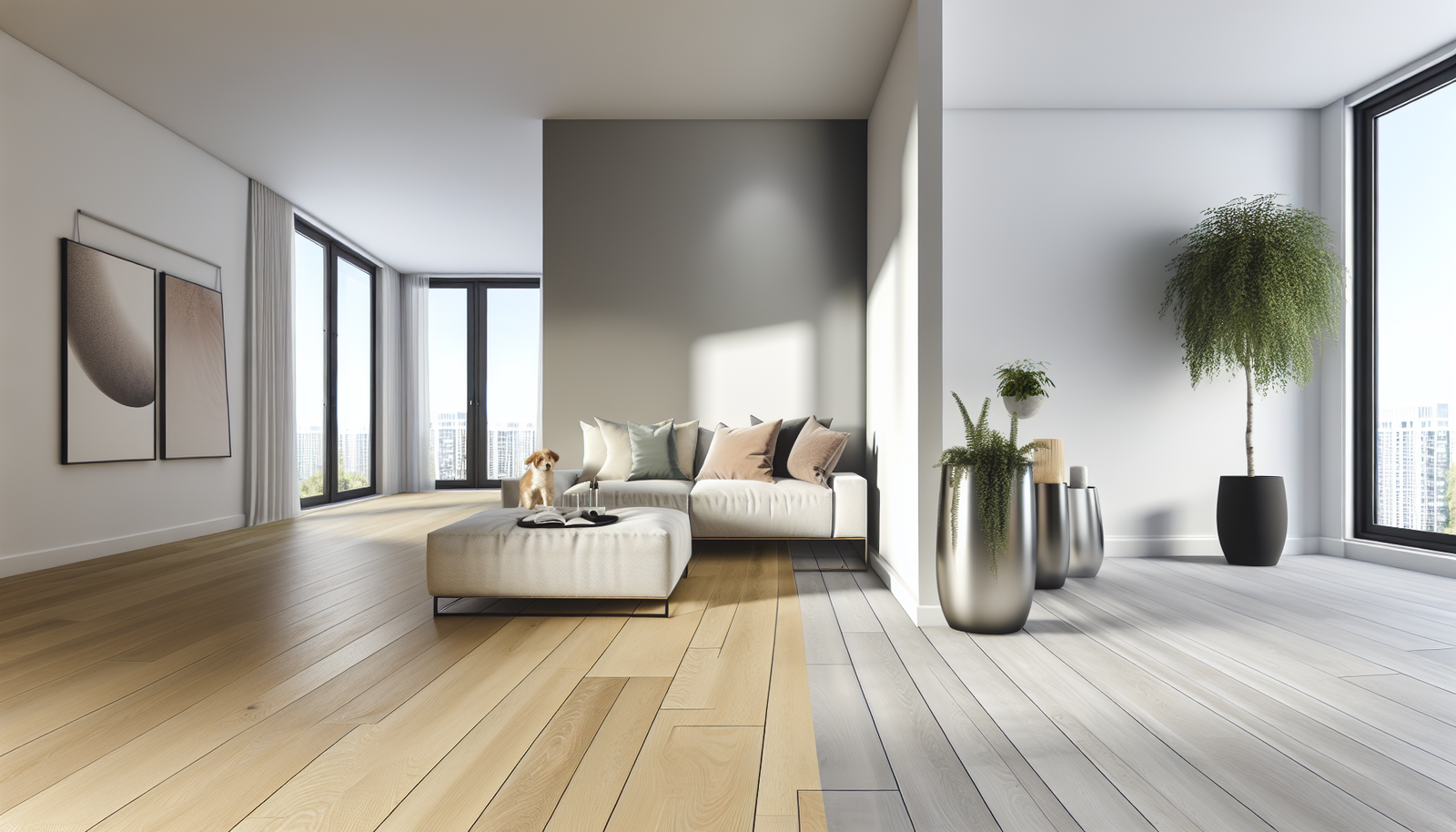
Vinyl and laminate both offer attractive, cost-effective living room flooring options. Vinyl excels as living room flooring for water resistance, pet households, and heavy traffic; laminate often wins on hard-surface feel and lower entry cost. Match your living room flooring choice to your lifestyle, check wear layer and AC rating, prepare the subfloor and underlayment, and follow maintenance and warranty guidance to maximize lifespan and value.