
Table of Contents
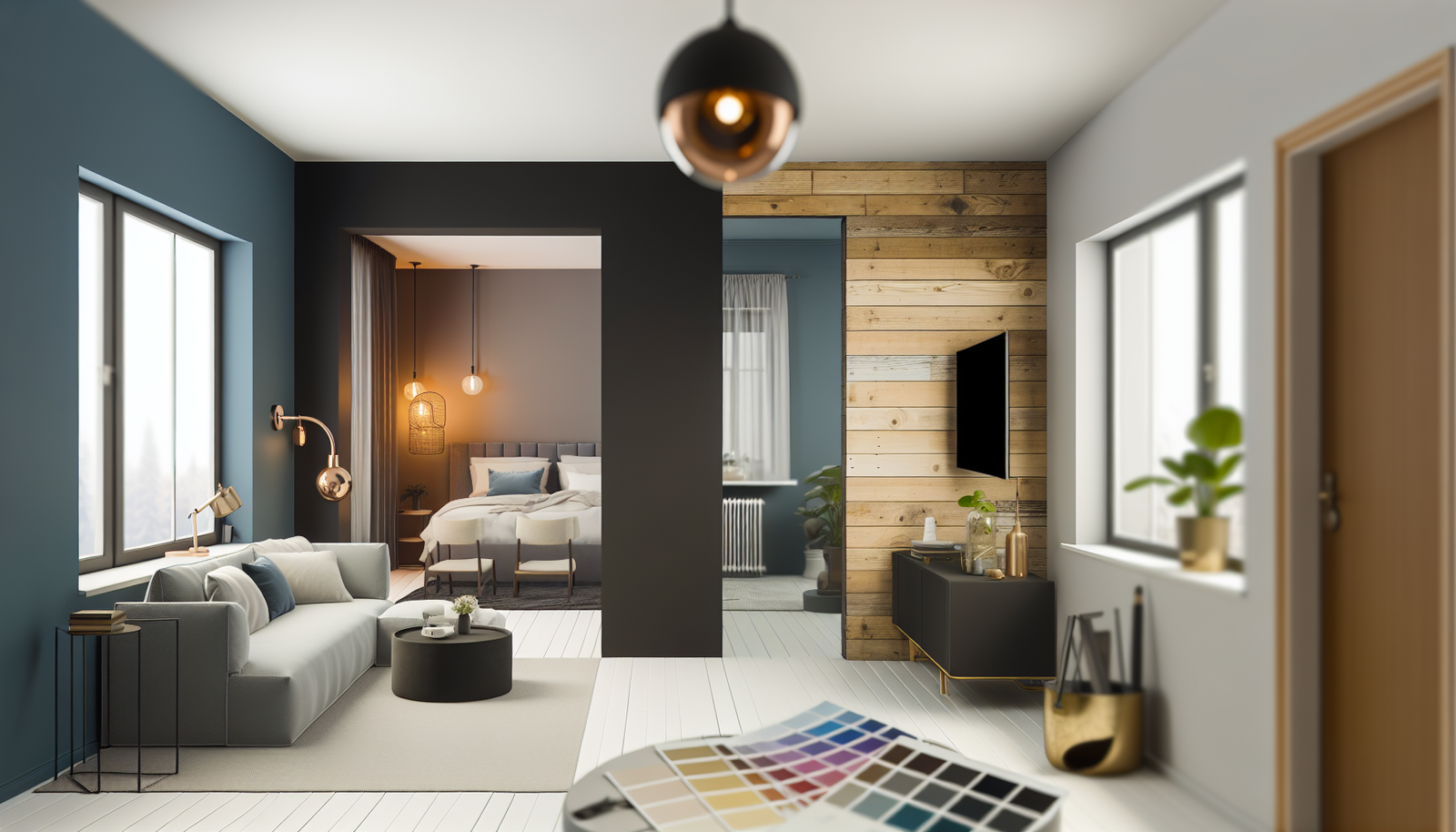
Accent walls can transform any room, adding color, texture or material to create a striking focal point without breaking the budget. This guide covers a variety of wall accent ideas—from bold black or blue tones to calming greens and whites—along with stylish wood accent wall options. For more inspiration on enhancing your interiors, check out these wall decor ideas. You’ll also find practical tips for bedroom and living room installations, including finishes, placement, styling, and maintenance to achieve balanced, on-trend spaces.
Why accent walls work and how to choose the right wall
An accent wall serves as a purposeful design element that enhances the interior environment both visually and functionally. The primary function of accent walls is to establish a bold focal point, add visual balance to a space, and create zones within open layouts. By introducing unique colors or textures—such as painted finishes, wood accent wall treatments, or textured panels—accent walls can dramatically alter a room’s mood and perceived proportions.
The strategic use of color affects our perception: dark shades (like a black accent wall) can recede visually, making a room feel cozier; bold greens or blues can energize and introduce calm or creativity; while textures like wood offer warmth and natural grounding. These wall accent ideas tap into psychological effects, guiding energy flow and providing a backdrop for personal style and décor.
- Assess the room’s function: Decide if the space is for relaxation (bedrooms), socializing (accent wall living room), or working. This influences both hue and placement.
- Identify natural focal points: Look for features that already draw attention—such as a fireplace, TV, or headboard wall for a bedroom accent wall.
- Consider sightlines: Evaluate from which vantage points the accent wall will be visible, especially from adjoining rooms or main entrances.
- Analyze lighting: Note how natural sunlight and artificial fixtures highlight different walls throughout the day, aiding in color and texture selection.
- Factor in proportions: A long wall can elongate a room when used as an accent, while a short wall at the end of a space can help balance or compact the visual field.
- Ideal wall proportions: Walls uninterrupted by doors or windows, at least 1.5–2 meters wide.
- Avoid accent walls: In already busy or highly patterned spaces, or when all walls have competing features.
- Accent wrap: Generally, stop color at inside corners; only extend to adjacent surfaces when intentionally continuing a visual line.
Examples:
- Wall lights: Position 152–170 cm from floor for best effect on accent areas.
- Fireplace walls: Mantel should be roughly 1/3 the wall’s height below ceiling for pleasing balance.
- Long vs. short wall: In living rooms, the farthest wall from the entry can frame the space; in bedrooms, the headboard wall typically works best.
Architectural details influence your decision: if the strongest wall contains multiple doors or windows, consider a partial accent—like a panel behind the bed or a vertical section with slatted wood for both depth and focus. This approach maintains impact without overwhelming with color or texture.
Checklist before starting:
- Does the chosen wall serve as a true focal or transition point?
- Are key furniture and lighting elements accounted for?
- Do architectural features enhance or detract from a full-wall accent?
- Is the accent color compatible with the rest of the palette?
- Have you checked visibility and lighting at multiple times of day?
Accent Wall Paint Strategies and Color Specific Guidance
Painting is the quickest, most adaptable way to redefine a space with an accent wall. Unlike other wall accent ideas, paint offers boundless color choices, fast project timelines, and easy changeability, making it especially versatile for bedroom accent walls and accent wall living room transformations.
Paint finish selection is crucial for both appearance and durability.
- Flat/Matte: Ideal for low-traffic bedrooms—masks small imperfections, but less washable.
- Eggshell: Slight sheen, good for living rooms and moderate-traffic areas—easy to wipe.
- Satin: Subtle gloss, highly cleanable—excellent for accent wall living rooms, kid bedrooms.
- Semi-gloss: High durability, reflects light best—use sparingly where deep sheen is desired.
For accent wall paint in family spaces, opt for eggshell or satin for balance of softness and cleanability.
Paint finish selection is crucial for both appearance and durability.
Accent Wall Color Strategies:
- Black Accents:
- Pair with crisp white trim, light floors/rugs, and metallic or mirrored decor to prevent cave-effect.
- Ideal with ample daylight or layered artificial light.
- Emotion: Dramatic, intimate, modern.
- Blue Accents:
- Dusty or navy blue for coziness; pale sky or powder blue for barely-there lift.
- Pair with mid-tone woods, brass, oatmeal textiles for warmth.
- Emotion: Calming, serene, fresh.
- Green Accents:
- Sage and olive for restful, bedroom accent walls; emerald or juniper for bold energy in social spaces.
- Pair with natural woods, blacks, golds.
- Emotion: Restorative, vibrant, grounding.
- White Accents:
- A true white accent wall pops against creamy or gray walls—stands out more with high-sheen finish.
- Use texture (limewash, matte striping) to differentiate from bland white trims or ceilings.
- Emotion: Expansive, crisp, gallery-like.
- Advanced techniques:
- Two-sheen striping: Paint stripes in same color, one eggshell and one satin, for subtle pattern.
- Color blocking: Paint sharp geometric shapes with multiple colors to create dynamic energy.
- Ombre fade: Blend two or more shades vertically or horizontally for a dreamy effect.
- Faux finishes: Sponge, rag roll, or brushed-on glaze to simulate texture or depth.
- Prepping & Painting Steps:
- Patch/sand imperfections and clean wall.
- Apply quality primer if painting over dark color or new drywall.
- Cut in around edges with angled brush.
- Roll wall in sections, maintaining a wet edge.
- Inspect for holidays; touch up as needed once dry.
- Testing samples:
- Paint at least a 2×2 ft area on the accent wall.
- Review color in morning, afternoon, and evening.
- Photograph and compare with key room elements under all lighting scenarios.
- Cost & Timeline:
- DIY: $40–$100 (materials only); 3–6 hours.
- Professional: $150–$450 (labor and materials); 1 day turnaround.
Five key accent wall paint takeaways:
- Choose finish for durability and cleanability based on room use.
- Pair color with light/reflective decor to prevent heaviness.
- Test large samples and observe how light affects mood.
- Add texture or advanced techniques for a bespoke look.
- Plan for surface prep and drying time to achieve best results.
Wood accent walls: texture and warmth for any room
- Reclaimed wood
Visual Effect: Rich variation, rustic patina, unique grain and color.
Best Room Use: Living rooms, home offices, bedrooms for cozy ambiance.
Cost Spectrum: Mid-high; cost varies by source.
Pros: Eco-friendly, visually complex, story-rich.
Cons: Irregular thickness, potential contaminants, extra prep. - Shiplap
Visual Effect: Clean, linear; classic coastal or farmhouse feel.
Best Room Use: Bedrooms, living areas, kids’ rooms.
Cost Spectrum: Low-medium.
Pros: DIY-friendly, crisp lines, expands narrow spaces visually.
Cons: Overdone in some regions, dust can settle in grooves. - Slat walls
Visual Effect: Modern verticality, shadow play, acoustic benefit.
Best Room Use: TV walls, bedrooms, offices.
Cost Spectrum: Medium-high.
Pros: Contemporary, semi-open feel, sound-softening.
Cons: More installation time, precise spacing needed. - Board and batten
Visual Effect: Grid texture, architectural interest.
Best Room Use: Dining rooms, transitional hallways.
Cost Spectrum: Low-medium.
Pros: Customizable pattern, works painted or natural.
Cons: Needs careful planning for symmetry. - Picture frame moulding
Visual Effect: Elegant, formal, layered depth.
Best Room Use: Dining and living rooms.
Cost Spectrum: Medium.
Pros: Pairs beautifully with color blocks or wallpaper.
Cons: Demands precision in cutting/joining. - Engineered Wood & Veneer Panels
Visual Effect: Uniform, sleek, expansive color/wood options.
Best Room Use: High-humidity spaces, modern homes.
Cost Spectrum: Low-high (engineered panels more affordable than solid wood).
Pros: Stable, sustainable, easy to install.
Cons: Less authentic texture if budget options chosen.
- DIY Step-by-Step: Slat Wall
- Tools: level, miter saw, nail gun, wood slats, adhesive
- Prep: Clean, prime wall, locate studs
- Moisture: Avoid bathrooms unless slats are sealed MDF or treated wood
- Install: Mark layout, attach slats with adhesive and finish nails, check for alignment every few rows
- Time: 2–4 hours per 10 sq ft (view complexity and drying time)
- DIY Step-by-Step: Shiplap
- Tools: saw, level, stud finder, brad nailer
- Prep: Level surface; address any wall bumps
- Moisture: Use PVC or sealed wood for bathrooms/kitchens
- Fasten: Nail into studs, stagger joints
- Time: 1.5–3 hours per 10 sq ft
- Finish Choices
- Stains: Highlight grain, deepen contrast—great with metallic hardware.
- Clear Sealers: Retain natural hue; use matte for subtlety, gloss for drama.
- Painted Wood: Matches painted walls, allows bold color blocking; use lighter or darker than main walls for contrast.
- Maintenance: Dust monthly, re-seal every 2–5 years if in sunlight or near water.
- Bathrooms/mudrooms: Choose moisture-resistant sealers or composite woods.
- Combining Wood with Paint & Lighting
- Half-wall wood + upper painted wall (best for bedrooms/entryways)
- Wood panel with painted trim for striking edge definition
- Highlight texture with wall washers or uplighting; use black/satin metal hardware for emphasis
- Sustainability & Cost
- Salvaged or FSC-certified wood is best for eco homes; check for VOC-free finishes
- Engineered panels offer value/sustainability; avoid uncertified tropical hardwoods
- DIY (materials only): $5–$20/ft²; Premade panels: $10–$40/ft²; Pro install: $25–$75/ft²
- Styling Examples
- Black slat wall + white walls + gold lighting = luxe modern bedroom
- White shiplap, navy rug, brass sconces = coastal living room
- Stained board and batten + olive upper wall = moody den
- Warm reclaimed wood + green paint = eclectic office
- Case Study: Budget DIY
- Material: MDF slats, matte black paint
- Time: 4 hours for 8 ft wall
- Expected Look: Modern, geometric, high contrast
- Case Study: High-End Install
- Material: Walnut veneer panels, integrated LED uplights
- Time: 2 days with professional crew
- Expected Look: Sleek, seamless, dramatic with rich warmth
Room specific solutions for bedroom and living room accent walls
- Bedrooms: The headboard wall is the classic accent spot. Choose serene tones like muted green or blue for calm, or go bold with black or deep navy for drama. Decide between:
- Full wall accent (floor to ceiling) for enveloping effect
- Panel or wood section behind bed (height: ~120–150 cm) for subtlety
- Coordinate bedding and window treatments to echo or softly contrast the feature color; linens with hints of wall tone add balance.
- For bedside sconces, mount at 152–170 cm from floor (eye level when seated), spacing ~15–20 cm from both bed edge and artwork.
- Layout tips:
- Allow minimum 7–10 cm between bed and accent wall for airflow.
- Artwork width: roughly 2/3 the width of the bed looks proportional.
- Living Rooms: Accentuate the wall behind the TV or fireplace. Use darker hues (e.g., charcoal, forest green) to reduce TV glare; lighter colors enhance open feel but may reflect more light onto screens.
- Built-ins or shelving anchor long walls; cover 2/3 to 3/4 length for balance without overwhelming the space.
- Set seating 30–45 cm away from the accent wall to maintain walkways without crowding the focal area.
- For open-plan layouts: Ensure accent walls are visible from sightlines like kitchen or entry. Transition smoothly with:
- Paint wrapping adjacent corners
- Partial wood panels leading into new zones
- Framed glass or shelving partitions flanking the accent area
- Styling Layering Tips:
- Rugs: Choose a tone that links wall and furniture.
- Furniture: Maintain a 2:1 ratio between wall depth & largest item (e.g., dark wall, light sofa; vice versa).
- Layer art: Cluster prints in mixed sizes; avoid wall colors echoing frame tones for impact.
- Palette suggestions:
- Bedrooms: Oak + warm white + taupe; Deep navy + brass + off-white; Sage + pastel pink + crisp white trim
- Living rooms: Walnut + linen + olive; Matte black + gold + greige; Pale blue + sand + white moulding
- Troubleshooting:
- Accent wall “too much”: Layer with neutral art or airy textiles
- Color shift at night: Use warmer bulbs; sample paint in artificial and daylight
- Wood tone clash: Add throw cushions or art repeating the wood’s undertone
- Checklist Before Painting or Installation:
- Test color swatches in all lighting conditions
- Confirm furniture spacing and electrical placements
- Finalize artwork and accessory scale
- Pre-coordinate textiles for unity
- Preview wall from key open-plan angles
Styling maintenance and resale friendly considerations
- Styling Guidance:
- Layering textures: Pair matte-painted accent walls with velvet pillows, chunky throws, faux fur rugs, or linen drapes to soften strong colors or wood grains.
- Mixing metals: Black and deep blue walls pop with brushed brass or gold fixtures; green walls pair beautifully with matte black or antique bronze hardware.
- Artwork and mirrors: Hang oversized art or geometric mirrors to reflect light and break up bold color blocks. Over wood, lean art for a casual vibe.
- Balancing bold hues: Soften black or intense green accent walls with pale upholstery, light woods, and glossy ceramics. Position mirrors to bounce light and reduce heaviness.
- Pairing examples:
- Black: Cream rugs, brass lighting, clear acrylic furniture, abstract gold-leaf art.
- Blue: White or sand textiles, silver or chrome accessories, driftwood frames.
- Green: Oatmeal linen bedding, woven baskets, black picture frames, white ceramics.
- White: Layered natural woods, greenery, black and tan accents, textured textiles.
- Wood: Gray or sage textiles, leather cushions, black iron sconces, live plant elements.
- Maintenance:
- Cleaning painted walls: Use a soft microfiber cloth and mild soap for stains. For matte paints, avoid abrasives; for satin or semi-gloss, gentle sponges are safe.
- Scuff touch-ups: Keep matching paint handy for quick dabs on nicks. For deeper tones, color-matched touch-up pens can help.
- Wood walls: Dust monthly; wipe with a damp (not wet) cloth. Refinish or reseal every 2–4 years based on sun and moisture exposure—use furniture polish for lighter upkeep, and wood oil for deeper protection.
- Repainting or refresh frequency: Repaint high-traffic accent walls every 3–5 years. Deep colors may require more frequent touch-ups to keep a fresh look.
- Resale & Buyer-Friendly Solutions:
- Favor neutral versions of bold hues—try sage instead of emerald, mid-blues not navy, greige over stark white—for broad appeal.
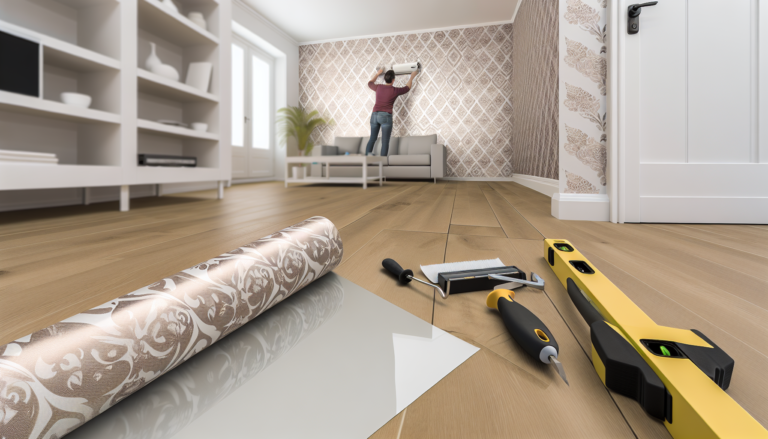
- Peel-and-stick wood or wallpaper panels offer impact and are easily removed.
- Integrate colors and finishes using large area rugs, furniture, and art that echoes the accent color; this ensures cohesion for potential buyers.
- Cost-Benefit:
- Professional accent wall: ~$300–$800 materials/labor; adds 1–2x return in perceived home value and increases buyer interest in listings by ~22% (industry averages).
- Peel-and-stick alternatives: Cheaper upfront, makes reversing design easy for quick sales.
- Low-Commitment Accent Wall Alternatives:
- Temporary wallpaper rolls
- Large-scale framed painted panels
- Leaning prefabricated wood planks at the base of the wall
To remove:- Gently peel corners, pulling slowly to avoid wall damage.
- Clean adhesive residue with warm soapy water.
- Patch minor nail holes and touch up underlying wall paint as needed.
Conclusions
Accent walls are a high-impact, low-cost design tool that can define space, showcase personality, and add value. Whether you choose dramatic paint, calm greens and blues, crisp white, bold black, or textured wood, plan placement, test samples, and balance lighting and furnishings. With careful execution and maintenance, an accent wall will elevate bedrooms and living rooms into cohesive, stylish spaces that last.