
Table of Contents
Effective bedroom lighting creates the perfect mix of comfort, function and atmosphere. In this guide, you’ll discover how to design ceiling-focused lighting — from layering ambient illumination to choosing the right recessed, pendant or flush-mount fixtures. You’ll also learn smart placement strategies, key technical specs and simple control options that elevate your space. And because lighting works hand-in-hand with visual style, exploring inspiring wall decor ideas can help you enhance the overall mood of your bedroom
Principles of Bedroom Lighting
Bedroom lighting isn’t just about brightening the space; it’s about supporting comfort, relaxation, day-to-day tasks, and setting the right ambience. Ideal bedroom lighting blends softness for winding down, targeted brightness for tasks like reading or dressing, and subtlety for maintaining a tranquil environment. Superior bedroom lighting balances these often conflicting goals, ensuring the room transforms to suit your needs.
Layered Lighting Fundamentals
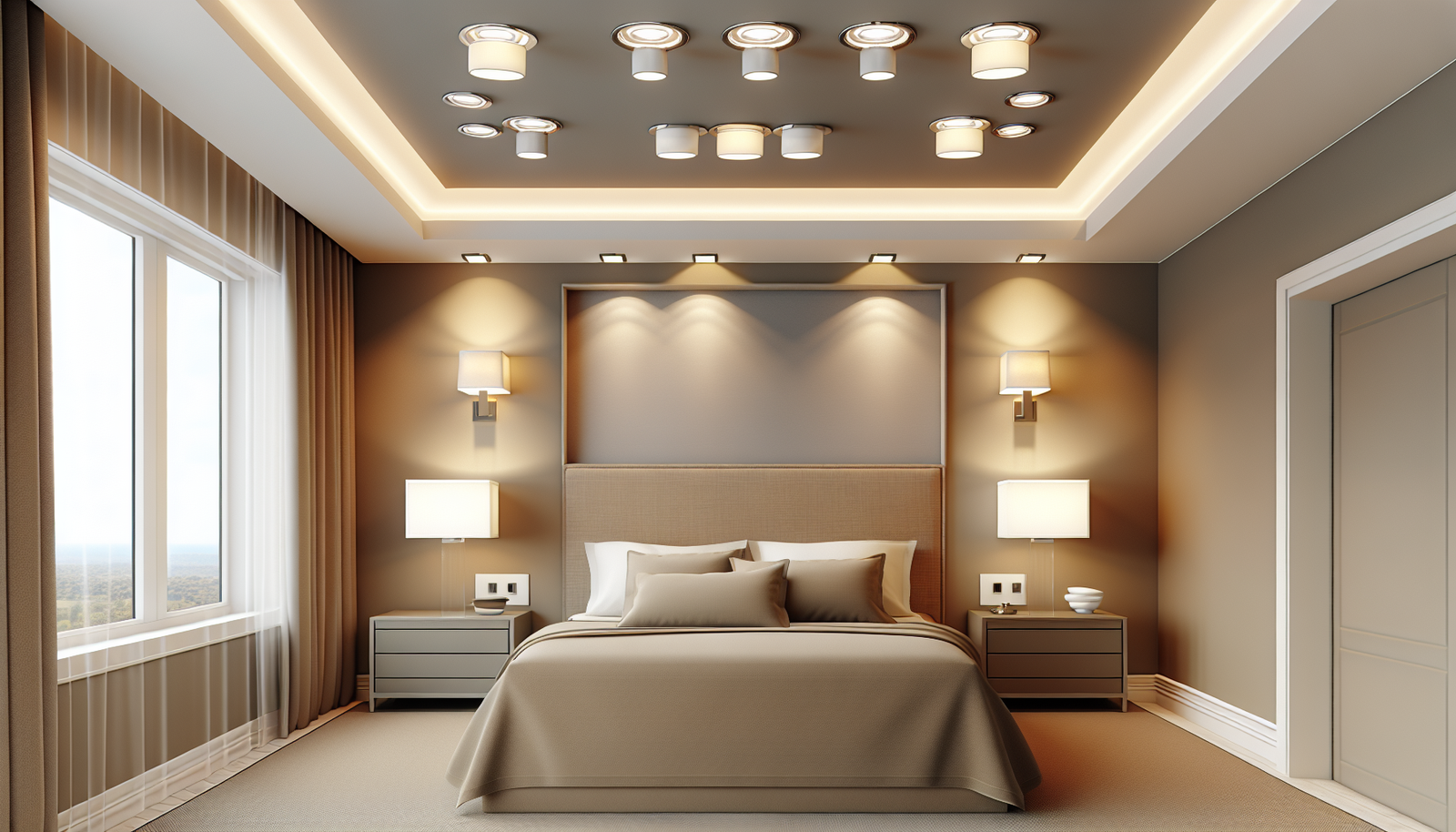
The foundation of effective bedroom lighting is smart layering — combining multiple light sources to create comfort, clarity and style. In any lighting plan, ceiling fixtures play the main role in establishing ambient or general illumination. This core layer of bedroom lighting, often created with recessed lights, flush mounts or subtle pendant fixtures, sets the overall brightness that helps you move through the room with ease. To complete your bedroom lighting design, pair this ambient layer with functional task lighting and mood-boosting accent lighting. While bedside lamps or sconces provide focused task light, the ceiling should deliver the primary, even blanket of illumination, ideally supported with dimmers for full control.
Key Technical Considerations
Several technical aspects are critical to achieving optimal bedroom lighting:
- Color Temperature: For restful, homey warmth, a color temperature of 2700K to 3000K is generally ideal. This soft white glow feels relaxing and is less likely to disrupt your natural sleep cycle.
- Color Rendering Index (CRI): Aim for fixtures with a CRI of 90+ to ensure faithful color appearance—important for dressing and maintaining visual comfort.
- Lumen Output: Bedrooms need enough light without overwhelming the senses. Target 10–20 lumens per square foot. For a 150-square-foot bedroom, this means a total of 1,500–3,000 lumens, to be spread through general and supplemental lighting. Divide total lumens among the ceiling and supplemental fixtures.
Efficiency and Control
LED technology is paramount for bedroom lighting, offering high light output, low energy consumption, and long lifespan. Look for quality fixtures with efficient drivers for flicker-free dimming and compatibility with smart controls. These drivers and LED chips save energy and lower heat output—both useful for comfort.
The fundamental principle: select ceiling lights that deliver warm, sufficient, and adjustably even ambient light, harmonize with task and accent layers, and utilize efficient, high-quality components for performance and flexibility.
Layered Lighting Strategy for Ceilings
Layering Ceiling Lights for Bedroom Comfort and Versatility
A comfortable, stylish bedroom depends on a well-designed bedroom lighting plan, and the ceiling plays the most important role in that setup. Effective bedroom lighting uses three essential layers — ambient, task and accent — to shape both the function and the mood of the space. With the right approach, ceiling-mounted fixtures can support all three layers, creating a balanced and visually appealing bedroom lighting design.
Defining the Three Layers via Ceiling Fixtures
- Ambient: This baseline illumination is most often established with flush-mount or recessed downlights distributed evenly across the ceiling, providing a soft wash of light for the entire room. For larger spaces, LED ceiling panels or low-profile semi-flush fixtures can ensure even coverage.
- Task: Focused lighting is used for reading, dressing, or working in bed. Directional recessed downlights or strategically hung pendant lights above reading nooks or a makeup vanity deliver direct, controlled beams. For example, a pair of small pendants over each side of the bed can supplement bedside lamps, freeing up table space.
- Accent: Adjustable recessed lights or a slim track system highlight architectural features, artwork, or a textured wall. These ceiling-mounted options add depth, dimension, and drama while supporting overall style.
Integration with Other Lighting Sources
Ceiling fixtures are only one part of effective bedroom lighting and rarely work well on their own. Pairing them with bedside lamps, wall sconces or even a well-placed floor lamp creates a layered bedroom lighting setup that adapts to different needs. Imagine a soft ceiling glow combined with bright sconces for organizing clothes, or low ceiling dimming paired with warm bedside lamps for winding down at night. With well-planned zones, dimmer controls and three-way switches, these bedroom lighting transitions become effortless and customizable.
Planning Layouts by Room Size and Ceiling Height
- Small bedrooms (8–11 ft. wide): A single flush or semi-flush fixture provides ambient light; supplement with a directional downlight near the closet for task needs.
- Medium bedrooms (12–15 ft.): Use multiple recessed downlights or two flush fixtures spaced to avoid glare. Add pendants or adjustable accent lighting near the bed or work area.
- Large bedrooms or unique ceilings: In rooms with 9–10 ft. or vaulted ceilings, combine recessed ambient grids with pendants over bedsides or islands, and use track lighting to create accent zones. Lofts benefit from semi-flush fixtures and adjustable directional accents aimed at sloped surfaces.
Sample Scene Setups
- Reading: Recessed directional downlight over reading chair, bedside lamp or pendant dimmed to 50% (180–300 lumens at 3000K per fixture).
- Dressing: Overhead flush or LED panel at 80% output, accent downlights at wardrobe (800–1200 lumens total, 3000K, CRI 90+).
- Relaxation: Ambient ceiling lights dimmed to 20–30%, warm bedside lights or sconces on (400–600 lumens per grouping, 2700K for coziness).
Ceiling lighting, as a layered foundation, anchors these scenarios and supports the flexible use of other light sources, setting the stage for informed fixture choices in any bedroom design.
Choosing Ceiling Fixtures
Recessed Downlights
Slim and discreet, recessed downlights sink into the ceiling to provide widespread ambient lighting. Pros: Low-profile, visually expands rooms, ideal for minimalist or modern looks. Cons: Not a standout feature on its own, may cause uncomfortable glare if mis-aimed or with high-lumen output directly overhead. Best-Use: Layered, evenly spaced grid for general lighting or flexible task/accent illumination with adjustable versions.
Flush Mount Fixtures
These ceiling-hugging fixtures come in a spectrum of styles—classic domes, soft diffusers, or geometric shapes. Pros: Excellent for bedrooms with 8-foot ceilings, simple installation, diffuse light minimizes shadows. Cons: Less dramatic than pendants, can look basic if not carefully chosen. Best-Use: Centered above the bed in compact or medium rooms.
Semi-Flush Mounts
Drop slightly from the ceiling (typically 4–12 inches), allowing for more decorative elements. Pros: Adds visual interest, uplight produces softer ceiling glow for large bedrooms with 9- to 10-foot ceilings. Cons: Not suitable for low ceilings, glare possible if bulb exposed. Best-Use: Larger rooms or where you want a focal point above the bed.
Pendant Lights & Mini-Pendants
Suspend on cords or rods, with mini-pendants popular as bedside task lighting. Pros: Distinctive design flair, highly targeted light for reading or accent; keeps nightstands clear. Cons: Require ceiling height and careful placement to avoid visual clutter or bumping. Best-Use: Pair over nightstands, group in corners for cozy nooks.
Chandeliers
Statement fixtures, from traditional crystal to sculptural modern forms. Pros: Major style impact, soft ambient light ideal over beds in spacious or high-ceiling rooms. Cons: Can overpower small rooms, glare risk if bulbs exposed downward. Best-Use: Centered above bed in large or vaulted bedrooms.
Track Lighting
Adjustable heads on a mounted track provide flexible accent or task light. Pros: Direct light where needed, good for highlighting art/wardrobes. Cons: Industrial look isn’t for every bedroom, risk of excess glare. Best-Use: Large or multi-use rooms that need flexibility for changing layouts.
LED Panels
Ultra-slim fixtures offering diffuse, even light—often with selectable color temperatures. Pros: Energy efficient, low heat, contemporary look. Cons: Few decorative options; can feel cold if not balanced with warmer lights. Best-Use: Minimalist or modern bedrooms, especially for flush mounting.
Ceiling Fan Light Combos
Dual-purpose units match comfort with illumination. Pros: Practical, plenty of style/finish options, dimmer-friendly. Cons: Can dominate visual space, some split attention between light and airflow. Best-Use: Rooms that need both lighting and efficient air circulation.
Design Considerations
Scale matters: choose fixture diameter proportional to bed size and ceiling height (*example: 18–24 inches for queen beds, larger for king*). Style, finish and diffuser materials (frosted glass, metal, fabric) should complement bedroom decor. Glare and beam angle: Opt for covered bulbs or sloped trims to avoid harsh light in your eyes. Look for CRI 90+ for accurate color rendering, adjustable color temperatures (2700K for cozy, 3000–3500K for bright), and dimmer compatibility for scene control. Consult product specs for safe IP ratings near open windows, and match trim color to ceiling for seamless recessed can blends.
Popular Layout Recommendations
- Single centered fixture: Flush or semi-flush for compact or guest rooms.
- Recessed grid: Even ambient coverage for master suites/dressing areas, with accent pairs near closets.
- Pendant pair over nightstands: Replaces table lamps, perfect for reading and freeing surface space.
- Chandelier above bed: Lush visual anchor in spacious rooms with accent sconces or recessed perimeter.
Placement and Technical Specifications
Calculating Required Lumens
To create comfortable and functional bedroom lighting, begin by estimating the total lumens your space needs. A simple guideline is to use 10–20 lumens per square foot for general ambient bedroom lighting. Task zones—such as a reading area beside the bed—need stronger illumination, typically 30–50 lumens per square foot. For example, a 12′ x 14′ bedroom (168 sq ft) requires about 1,680–3,360 lumens for overall ambient bedroom lighting. If you read in bed and your nightstand area measures 2′ x 3′ (6 sq ft), plan an additional 180–300 lumens for task lighting. When reviewing the fixtures you selected earlier, add up their lumen outputs to ensure your bedroom lighting meets these targets.
Recessed Lighting: Spacing and Trim Tips
For recessed downlights, use the spacing formula: 1.5 to 2 times ceiling height between fixtures. In a room with an 8′ ceiling, install lights 12″–16″ from the wall and space 12″–16″ apart. Choose wide flood trims (e.g., 60–75°) to prevent “pools” of light and reduce harsh shadows. Avoid placing a downlight directly over your pillow—they create glare and discomfort. For closets, angle trims or wall-wash options aid illumination without dark corners, with one 4–6″ can per 4′ of closet space.
Pendants, Semi-Flush Mounts, and Chandeliers
Hang pendants or semi-flush mounts at least 7′ above the floor—or 30–36” above bedside tables for reading. Chandeliers over beds should clear the mattress by 7′ (or at least 30–36” if ceiling height is limited), and fixture diameter should be about 1/2 to 2/3 the width of your bed—e.g., for a queen bed (5′ wide), pick a 24–36” chandelier centered above.
Wiring, Zoning, and Load Safety
Zone lights on separate switches or dimmers (ceiling center, perimeter/downlights, and bedside task). For LEDs, a 10–12W bulb replaces a traditional 60W bulb. Always check the wattage loads on dimmers—especially for multi-fixture or ceiling fan combos. Use only dimmers rated for LEDs and avoid overloading fan circuits. If combining fixtures with varied beam angles and functions, group similar types on distinct controls for flexible bedroom “scenes.”
Controls Color and Installation Tips
Dimming Solutions and Compatibility
Flexible dimming control is essential for crafting both ambience and functionality in a bedroom. When selecting dimmers, always match compatibility between the dimmer type and your chosen fixture and driver: for line-voltage fixtures, TRIAC (forward-phase) and ELV (reverse-phase) dimmers are standard—ELV is often quieter and less prone to buzzing with LED loads.
For commercial-grade or tunable luminaires, 0–10V dimming ensures flicker-free, smooth operation but requires dedicated controls and wiring. Check the LED driver’s specifications for supported dimming methods, and consult the fixture manufacturer’s compatibility charts to prevent annoying flicker or incomplete dimming. Smart bulbs (such as Philips Hue or LIFX) offer built-in dimming and color features but verify that wall switch dimmers are compatible—some smart bulbs don’t work well with legacy dimmers.
Smart Lighting and Scenes
Modern bedrooms benefit from integrating ceiling fixtures into smart home ecosystems. Voice and app control enable effortless scene changes—set a “Relax” scene with warm, low light for evenings, or a “Bright Start” morning routine with cooler overheads. For reliability, hardwire ceiling lights to always-on power and use smart switches or hub-connected modules (like Lutron Caseta or Zigbee relays) so lights remain controllable even if the wall switch is flipped off. Always confirm compatibility between the fixture, control hub (Alexa, Google Home, Apple HomeKit), and network protocols for seamless automation.
Color Temperature Strategies and Tunable White
Bedrooms benefit from fixed warm white (2700K or 3000K) LEDs for a restful atmosphere, but tunable white fixtures (often adjustable from 2700K–4000K) allow you to align lighting with circadian rhythms by shifting to cooler tones for daytime activities and cozy warmth at night. Choose tunable options if you desire dynamic ambience or use the bedroom for varied tasks.
CRI Importance for Bedrooms
Color Rendering Index (CRI) above 90 is recommended so colors of bedding, art, and skin tones appear natural and inviting. Especially in bedrooms with varied materials, high CRI enhances aesthetics and comfort.
Installation Best Practices and Safety
Always consult a qualified electrician for ceiling lighting installation. Use properly rated and secured junction boxes—retrofit boxes are suitable for lightweight LEDs, but heavier chandeliers or fans require fan-rated mounting brackets and reinforced supports. Plan switch and control locations for convenience. Avoid common pitfalls: mismatched dimmers, overloading circuits, or installing wireless controls where Wi-Fi signal is weak. Before purchasing, cross-check fixture wattage, dimmer and driver compatibility, and home automation integration requirements. This will ensure a safe, reliable, and visually comfortable bedroom retreat.
Conclusions
Effective bedroom lighting starts with well-planned ceiling lighting that blends layered light, the right fixtures, proper placement and intuitive controls. Prioritize warm color temperatures, the correct lumen output and reliable dimming to match every activity in your room. Choose ceiling fixtures that fit the scale and style of your space so your bedroom lighting feels cohesive and balanced. With thoughtful planning and a few simple calculations, you can create restful, functional bedroom lighting that enhances both comfort and aesthetics.