
Table of Contents
Coffee tables anchor living rooms and reflect your style while serving practical needs. This guide explores the most popular types — round, wood, marble, glass, black, white, ottoman and storage designs — and walks you through sizing, styling with books and decor, buying decisions and maintenance so you can choose a coffee table that looks great and works hard.
As you explore the best coffee tables—whether round, wood, marble, glass, ottoman, or storage styles—you might also want to browse broader décor options. This guide on Lowe’s home improvement can give you more ideas
Defining Styles and Materials
Coffee tables anchor the living room and their materials and styles shape both function and mood. Selecting between a round coffee table or a square coffee table means weighing your need for softness versus structure; rounds, for example, eliminate sharp corners—better for child- or pet-friendly spaces—while squares maximize surface in streamlined, modern rooms. When space is limited, small coffee tables provide flexible, clutter-free solutions, and nesting tables or a coffee table set let you expand surfaces for guests or tuck them away for daily flow.
Material choices affect look, feel, durability and care. Wood coffee tables—oak, walnut, mango or engineered woods—offer warmth, appealing tactile wood grain, and a forgiving surface for living rooms with children or pets, hiding minor scratches or spills. For a sleek, contemporary vibe, coffee table glass creates airiness and showcases rugs or flooring beneath; however, it’s fingerprint-prone and requires steady cleaning—less ideal if you have toddlers.
Add luxury with a marble coffee table. Distinct marble veining varies each piece; they resist heat, but etching and staining are risks without coasters, so households with heavy use or kids will need to be vigilant. Black coffee tables in matte or glossy painted finishes command attention and hide some marks, but dust is more visible. A white coffee table brightens a space but can stain or show chips.
Upholstered ottoman coffee tables excel in cozy, family-focused seats—soft, safe edges double as extra seating. Add a tray to stabilize coffee table books or drinks. For the multitaskers, a coffee table with storage helps control clutter: think lift-tops or hidden drawers, especially in busy or small interiors. Carefully consider how each tactile quality or finish holds up to daily life before purchase for longevity and satisfaction.
Scale Shape and Placement for Every Room
- Getting the Right Size: To ensure a coffee table fits seamlessly within your space, always measure both the room and main seating. For small living rooms or apartments, a coffee table small—no longer than two-thirds the length of your sofa—keeps proportions balanced. In larger, open-plan areas, opt for a modern coffee table or coffee table set with generous surface but still allow for ease of movement.
- Height Matters: For comfort and visual harmony, most coffee tables should sit between 40–50 cm high. A table too tall or short disrupts the line of sight and makes setting down drinks awkward. Match the height to your seating—ideally level with or just below sofa cushions.
- Shape and Traffic Flow: Round tables are ideal for dynamic or compact rooms as they soften edges and ease movement. Positioning a round table in a high-traffic living space prevents bumps and creates better flow. For more formal lounges, a square coffee table or rectangular coffee table anchors symmetry and frames a rug. Use coffee table glass or marble coffee table for an airy effect, particularly in tighter areas.
- Placement & Spatial Rules: Always allow 30–45 cm between seating and your coffee tables—close enough for convenience, but wide enough for knees and easy movement. Leave at least 75 cm between the table and walkways or larger furniture pieces so people can circulate comfortably. In small rooms, consider nesting tables or a coffee table set for flexibility and stowing away pieces as needed.
- Rugs and Layouts: To visually ground the zone, center your coffee table on the rug or sofa arrangement. Round coffee tables soften square rugs, while rectangular and square tables reinforce spatial lines. In open-plan layouts, a storage coffee table or ottoman coffee table can subtly define the sitting area without needing walls.
Functionality and Storage Solutions
Making storage part of your coffee table choice adds both day-to-day convenience and visual calm, especially as rooms become more multifunctional or compact. After considering materials, finishes, and the size and shape that best fits your space, it’s time to think about whether you want a storage coffee table, an ottoman coffee table with hidden compartments, a coffee table with storage drawers, or a more open book coffee table-style shelf. Each has its own strengths:
- Drawers — Best for organizing small media devices, remote controls, chargers, or stationery discreetly.
- Lift-top tables — Allow you to hide away toys, blankets, board games, or office supplies while doubling as a workspace.
- Open shelving (book coffee table) — Ideal for displaying coffee table books, magazines, or baskets for miscellaneous items. Encourage a lived-in look while keeping things accessible.
- Hidden compartments — Found in modern or minimalist tables, perfect for valuables or seasonal items you don’t want visible.
- Ottoman interiors — Offer deep storage for throw pillows, bedding, or even bulky items, and can soften a room alongside hard surfaces.
For small spaces, opt for a storage-focused piece or even a coffee table set with nesting tables. These can sub in for classic storage by sliding apart for serving or homework, then tucking away to open up the floor. Nesting tables don’t store within, but free up room for a clutter-free environment.
Coffee table books are decorative as well as functional. Choose large-format, hardcover volumes in art, fashion, architecture, or photography. Stack in odd numbers—three to five—for height variation. Place the largest book on the bottom, layer by size, and top with a sculptural accent or tray for polish.
Weight limits matter when adding storage or stacking books:
- Check the manufacturer’s guidelines, especially with glass, modern, or marble coffee tables.
- Evenly distribute heavier items to prevent warping or toppling.
Space-conscious homes can blend a white coffee table with slim shelving, or a black coffee table with deep drawers. Match function to daily needs—media, play, work, display—for a solution as stylish as it is practical.
Styling Tips and Material Mixing
Styling your coffee table goes beyond display—it’s a harmony of aesthetics and practicality, tailored to the room’s mood and the table’s material. Regardless of type—a round table, wood coffee table, modern coffee table, marble coffee table, or black coffee table—start with visual balance. Ground the styling by placing one central item: a stacked set of coffee table books, a large sculptural vase, or a tray. Anchor this focal point, then build height and variety around it with a plant, candle, or decorative box.
For a layered, modern or mid-century feel, combine opposing materials:
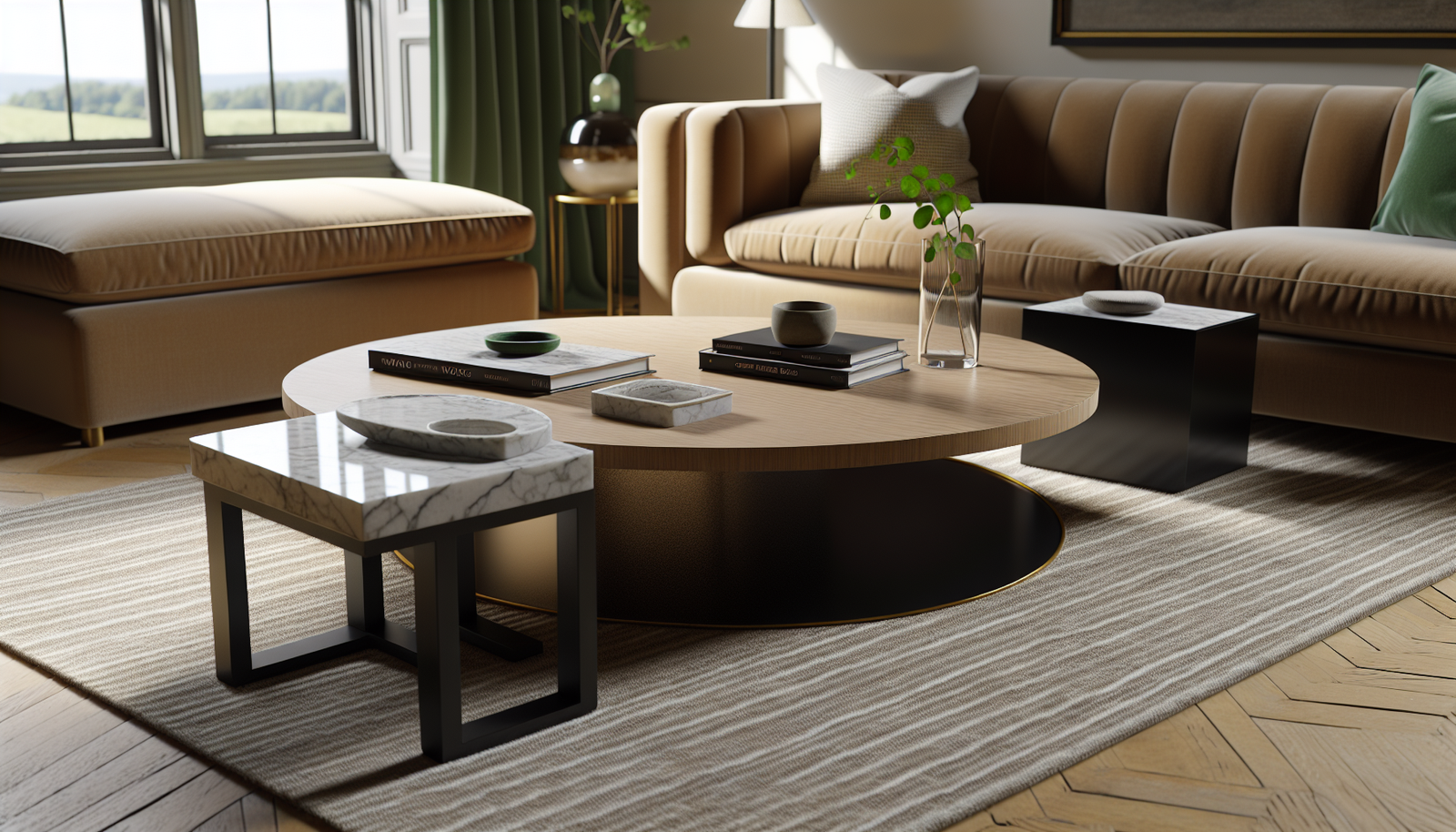
- Wood coffee table: Use a glass or marble tray, add textured ceramics and leafy greenery for contrast.
- Marble coffee table: Add warmth with a wood bowl, black metal candle holders, and a stack of minimalist coffee table books.
- Black coffee table: Pair with white or silver accents, arrange monochrome books, use matte vases and a pop of green.
- White coffee table: Layer tan leather coasters, warm metallics, and blush-toned florals to avoid sterility.
- Ottoman coffee table: Place a large tray for stability, then layer with a small stack of books, a low vase, and a scented candle—practical for footrest and function.
- Small coffee table: Limit to two or three objects: a single book, a compact succulent, and a subtle decorative bowl for keys or remotes.
For photography and social media, choose natural light. Face the setup toward windows for even illumination, and use a soft throw or open book to add life. Curate a mix of textures—smooth marble, rustic wood, transparent glass, plush textiles—for tactile interest.
Keep function central: leave space for mugs, remotes, or a tray to move when needed. Pursue a sense of curated simplicity, letting negative space frame statement objects. This approach prepares you to assess prospective coffee tables for both their visual and lifestyle fit before purchase and care, ensuring your next table suits your needs and looks stunning in any setting.
Buying, Budgeting and Care
Practical Buying Checklist:
- Measure your space and seating area: Leave 16-18” between sofa edge and the coffee table, and ensure the table height is within 2” of your seat cushion for comfort.
- Material pros and cons: Wood coffee table options add warmth; solid woods offer durability, but softer woods may dent. Marble coffee table surfaces are timeless and sturdy but require sealing. Glass coffee table varieties visually lighten a room but show fingerprints. Ottoman coffee table pieces double as seating but may stain. Square and round tables each influence space flow—round tables are safer for tight, high-traffic areas.
- Storage needs: Evaluate whether you need a coffee table with storage (drawers, shelves, lift-tops, or trunk styles) or prefer a minimalist coffee table set.
- Finish and color: Consider black coffee table or white coffee table finishes for contrast; natural woods and marble make a material statement. Pick finishes that fit your everyday use and lifestyle.
- Assembly and delivery: Check if the coffee table is flat-packed or pre-assembled, and verify delivery logistics for weight/bulk (some marble coffee tables require two-person delivery).
Price Ranges:
- Wood coffee table: Budget ($80-$250), Mid-range ($250-$800), Premium ($800–$2500+ for hardwood/custom designs).
- Marble coffee table: Budget (marble veneer, $200-$400), Mid-range ($500-$1200), Premium ($1400–$4000+ natural stone).
- Glass coffee tables: Budget ($120-$350), Mid-range ($400-$950), Premium/designer ($950–$2500).
- Ottoman coffee table: Budget ($100-$300), Mid-range ($350-$750), Premium/upholstered ($750–$1800).
Sourcing and Policy Tips:
- Explore local woodworking studios, eco-friendly materials, and vintage/secondhand coffee tables for unique or sustainable choices.
- Buy from reputable online retailers offering detailed specs, photos, and robust return/warranty policies (look for at least 14–30 days for returns, ask about frame/material warranties).
Material Care Instructions:
- Wood: Dust with soft cloth weekly, wipe spills quickly, use furniture oil or wax every 6-12 months. Avoid direct sunlight and heat.
- Marble: Seal annually; blot stains immediately with mild soap and water. Don’t use acidic cleaners; use coasters to prevent etching.
- Glass: Use non-abrasive glass cleaner; microfiber cloth prevents scratches. Avoid placing hard/heavy décor directly on the surface.
- Upholstered/Ottoman coffee table: Vacuum regularly. Spot clean stains promptly per manufacturer’s instructions; rotate regularly to even wear.
- Quick Care: Wipe surfaces daily, check for loose hardware seasonally, and re-oil or reseal as needed.
Actionable Decision Checklist:
- Have you measured your space and chosen a coffee table size and shape (round, square, small) matching your needs?
- Did you review material pros/cons and care requirements?
- Does your selection align with your style vision, storage needs, and budget?
- Have you checked return policies and reviewed maintenance commitments for long-term satisfaction?
Conclusions
Choosing the right coffee table balances style, scale and function. Whether you prefer a round wood piece, a sleek marble top, a black modern statement or a storage ottoman, consider material, dimensions, storage needs and maintenance. Thoughtful styling with books and accessories finishes the look. Use this guide to make a confident, lasting choice that fits your space and lifestyle.