
Table of Contents
Wooden bed frames and headboards combine durability, natural warmth and versatile style for any bedroom. This guide dives into wooden bed frames, integrated headboards, and practical specifics for wooden queen and king headboards. You’ll also find helpful related resources, including our Ultimate Guide to Sofa Fabrics and Upholstery, to support your full home decor planning. You’ll get material comparisons, accurate dimensions, design and installation guidance, plus care tips to choose or build the ideal bed for your space and budget.
Materials and construction of wooden bed frames
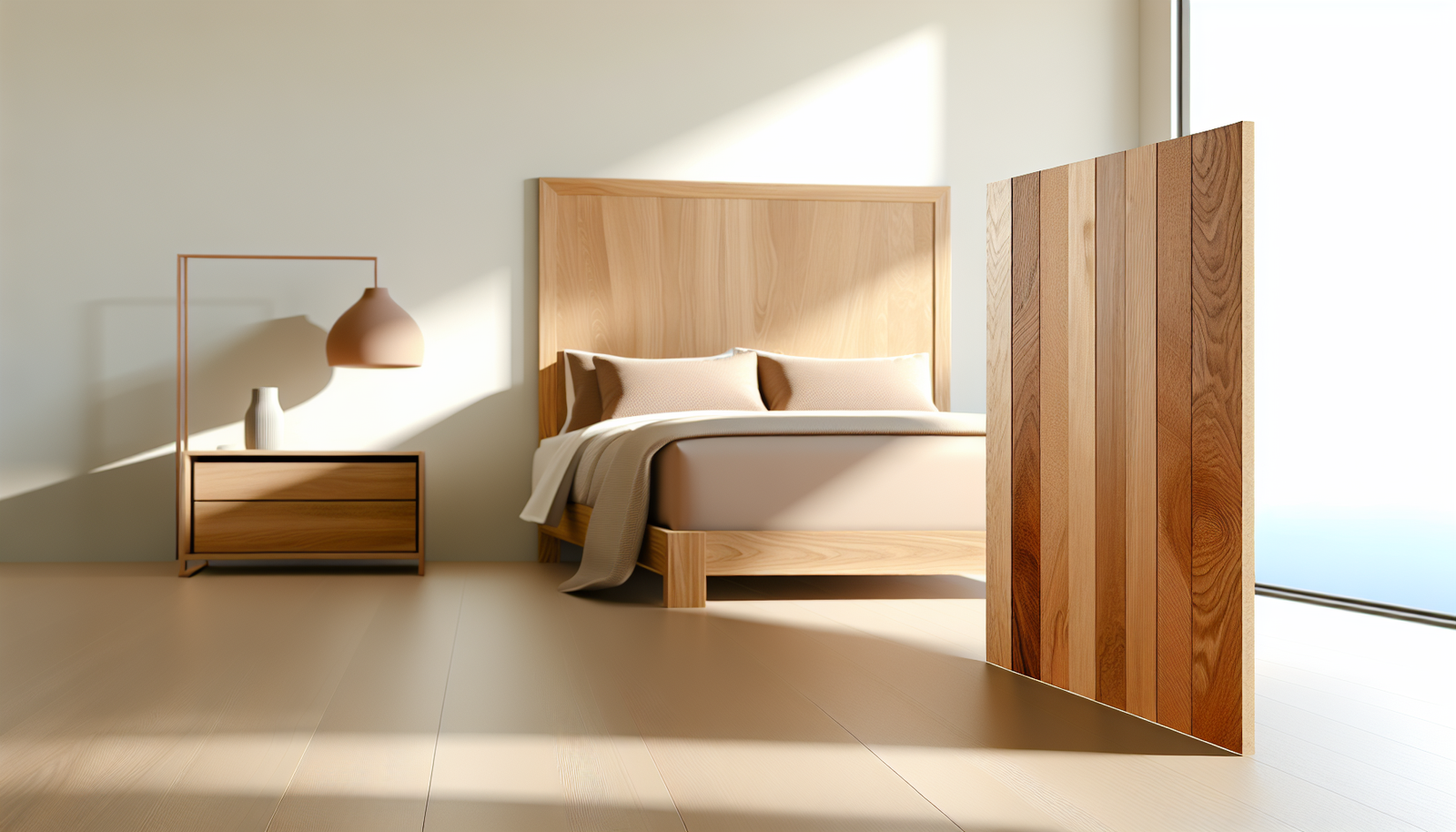
The selection of materials for a wooden bed frame, whether featuring a wooden queen headboard or a king headboard, directly affects its durability, appearance, and cost. Hardwoods such as oak, walnut, and maple are common choices for premium bed frames and headboards. Oak, for example, delivers a classic look with a strong, open grain and excellent resistance to denting; it ranges from light tan to deep brown. Walnut offers rich, dark coloration and a sophisticated aesthetic, while maple is smooth and fine-grained with subtle light tones. Hardwoods generally last decades with proper care, support higher weight limits (often up to 800–1,000 lbs or 360–450 kg for queen and king sizes), but they also increase the cost.
Softwoods like pine and poplar are more affordable and lightweight; pine has a knotty, rustic charm and takes paint or stain well, while poplar is smoother and suited to painted finishes. However, softwoods can dent more easily and may not support as heavy a load (typically 500–700 lbs or 225–315 kg).
Engineered woods, including plywood, MDF, and veneered panels, offer consistent strength and stability for the frame and for large wooden king headboards. Plywood (cross-laminated sheets) resists warping; MDF is dense and smooth for painted applications, although less moisture resistant. Veneered plywood combines a decorative hardwood face with an engineered core for cost efficiency.
For eco-conscious buyers, reclaimed wood or FSC-certified wood ensures sustainability. Reclaimed lumber delivers unique character and solid durability, while certified options verify responsible harvesting.
Key structural elements impacting a wooden bed frame’s longevity include solid frame rails, sturdy center supports that prevent sagging on queen and king sizes, and slats spaced no more than 2.5–3 in (6.5–7.5 cm) apart for even mattress support (especially critical for foam mattresses). Reliable legs and mounting methods—mortise-and-tenon joints, dowels, metal brackets—affect overall stability. Quality mortise-and-tenon or doweled connections can significantly boost load capacity and prevent creaking, while bolts and brackets make for easier assembly and disassembly.
- Hardwoods: Pros – strength, longevity, premium look; Cons – price, weight
- Softwoods: Pros – affordable, easy to work; Cons – lower durability, easier to mark
- Engineered woods: Pros – stability, value, consistent finish; Cons – can swell with moisture, less tactile character
- Reclaimed/Certified: Pros – environmental benefit, unique; Cons – variable cost and supply
Quality construction choices, such as robust joint work and optimal slat support, will define the lifetime comfort and resilience of your wooden bed frame with headboard, whether you choose a streamlined design or a statement wooden king headboard.
Benefits and types of wooden bed frames with headboards
A wooden bed frame with headboard is a favored choice for many homeowners, offering unique advantages that build on your earlier selection of material and construction techniques. This combined setup results not only in visual coherence, but also functional enhancement beyond the durability and character imparted by wood species. Practical reasons for choosing a wooden bed frame with headboard include back support while sitting in bed, preventing stains on the wall, sound dampening, and expanded storage in designs that integrate drawers or shelving.
There are several major types available:
- Integrated platform frames with built-in headboards for unified aesthetics and optimal structural stability.
- Separate headboard-and-frame systems that offer customization and easier upgrades, allowing you to select or replace a king headboard or wooden queen headboard as room needs change.
- Storage platform frames with drawers beneath or behind the headboard for linens and accessories.
- Sleigh frames featuring curved head and footboards, a classical choice that works beautifully in oak or walnut.
- Panel and slat headboard styles add character and airiness, while upholstered headboards on a wooden structure blend comfort with textural layering.
Aesthetically, a headboard provides a visual anchor and helps balance the scale and proportion of the bed within the room. Headboard height and thickness must interact harmoniously with mattress thickness (typically 10–16 in / 25–41 cm) and bedside tables (usually 25–30 in / 64–76 cm high). For a king headboard, 76–80 in (193–203 cm) wide and 48–65 in (122–165 cm) tall is common, ensuring presence and function in large bedrooms.
When pairing aftermarket headboards with bed frames, check:
- Bolt hole patterns: width, spacing, and height must match or adapt to your frame.
- Bolt hole patterns: width, spacing, and height must match or adapt to your frame.
- Overall mattress and box spring height: for correct headboard visual effect.
Checklist: Integrated vs Separate Headboard Solutions
- Integrated: unified look, simpler install, maximal stability. Trade-off: less flexible for future redesign or moving.
- Separate: greater versatility, easier replacement or upgrade, but may require careful matching for bolt pattern and scale.
Selecting the right wooden bed frame with headboard ties directly to the materials and assembly strategies discussed previously, influencing both comfort and style in your bedroom.
Design and dimensions for wooden queen headboards
When planning a wooden queen headboard, accurate sizing is crucial for comfort, stability, and aesthetics. The standard queen mattress measures 60 x 80 inches (152.4 x 203.2 cm). For a balanced look, choose a headboard width that matches or slightly exceeds the mattress. A common width is 60–66 inches (152–168 cm), but for styles with pronounced side overhang or trim, 64–68 inches (162–173 cm) works well. Height has an even greater impact on presence and should be chosen with both proportions and practical use in mind.
- Low profile: 36–48 in (91–122 cm), suits low ceilings or minimalist décor
- Tall headboard: 48–65 in (122–165 cm), ideal for rooms with standard-to-high ceilings or dramatic focal points
To get the right height, factor in mattress thickness (often 10–14 in / 25–36 cm), bedside tables’ height, and how much of the headboard you wish exposed above pillows. In rooms with 8 ft (244 cm) ceilings, a 48 in (122 cm) high wooden queen headboard strikes a comfortable balance, while tall ceilings allow up to 65 in (165 cm) without overwhelming.
Stylistic options in wood include:
- Flat panel (simple, modern)
- Framed boards or slab with molding
- Shiplap planking for texture
- Carved designs adding detail or heritage
- Slatted (horizontal/vertical)
- Mixed-materials, such as metal/wood
- Veneered, for unique grain or color variety
Mounting and attachment must suit both frame and headboard type. Most queen bed frames use bolt holes spaced 54–58 in (137–147 cm) apart, center-to-center. Check your wooden queen headboard’s mounting brackets or create a compatible backing plate.
- Wall-mounting requires stud alignment and heavy-duty anchors
- Rail-mounting attaches to frame with bolts; reinforce attachment for heavy wood
- Use additional reinforcement for headboards with thick panels or soft upholstery
A practical diagram would show a 64 in (162 cm) wide wooden queen headboard, with bolt slots 56 in (142 cm) apart and a suggested exposed height of 48–52 in (122–132 cm) above floor level.
Finishing choices like oil, wax, varnish, and stain each add character:
- Oil: Natural feel, deepens grain, low VOC; may amber with time
- Wax: Matte, silky, easy to touch up, but less protective
- Varnish/polyurethane: Durable, resists spills; consider low-VOC if air quality is a priority
- Stain: Largest color range; check for UV-fade resistance and off-gassing if sensitive
A well-chosen, beautifully finished wooden queen headboard not only frames your bed but becomes a style-defining element in your room.
Scaling up for king headboards and wooden king headboard specifics
When moving up to a king headboard, accurate proportions and robust construction become imperative for achieving both comfort and style. The standard king mattress measures 76 x 80 in (193 x 203.2 cm). For visual harmony, a king headboard should be at least as wide as the mattress, but it often benefits from extending 2–6 in (5–15 cm) beyond each edge. This provides a recommended width of 76–84 in (193–213 cm), balancing the visual weight of such a large furniture piece. Height varies by style, but a range of 48–70 in (122–178 cm) works well, allowing for prominent designs without crowding low ceilings or overwhelming modest rooms.
A wooden king headboard, due to its scale, demands structural upgrades versus smaller sizes.
- Support and Reinforcement: King frames require a center support rail—either stationary or adjustable. Opt for 5–7 slats (at least 1×4 in or 2×2 in dimension, spaced 2–3 in apart), or a solid platform, to prevent mattress sagging. Use thicker rails (minimum 1.25 in/3 cm solid lumber) and add 2–4 extra anchoring points for heavier wooden king headboards.
- Attachment: Bolts should be 5/16–3/8 in (8–10 mm) diameter, 4 in (10 cm) or longer, with washers. For wall-mounts, secure into studs at least every 16–24 in (40–61 cm), using lag bolts rated for 100+ lbs (45+ kg).
- Sag Prevention: Add a center post beneath the headboard, cross-bracing, and consider “French cleat” mounting for heavy or split-king designs.
California king beds (72 x 84 in/183 x 213 cm) follow similar rules: headboard minimum width aligns with mattress, height as above. For split-king arrangements, headboards may be full-width or divided; ensure stability at the seam with joined mounting hardware or a shared center support.
Solid wood offers timeless appeal, while upholstered king headboards introduce depth and softness but require deeper mounting (add 2–4 in/5–10 cm). Mount hardware through at least two layers of solid wood or reinforced particleboard for both options.
Plan nightstands 2–4 in (5–10 cm) from each headboard edge, leaving at least 6–10 in (15–25 cm) overhead clearance. Match or contrast woods for design cohesion—referencing earlier advice on material choice and mounting—ensuring each wooden king headboard offers lasting comfort and reliable support at larger scales.
Buying, building and caring for wooden bed frames and headboards
- Choosing Between Buying and Building: Decide whether to buy a ready-made wooden bed frame or construct your own. Buying saves time and often guarantees a professionally finished product, but building allows for full customization of size, species, and style for a unique wooden queen headboard or wooden king headboard. For most, an off-the-shelf wooden bed frame with headboard is the practical choice, but DIY appeals if you want tailored details or specialty materials.
- Comprehensive Buying Checklist:
- Measure your room and mattress—including height, width, and doorways for moving large king headboard frames.
- Check bolt patterns for compatibility with your mattress and desired wooden bed frame with headboard.
- Confirm slat spacing supports your mattress warranty (usually <3 in/7.5 cm for foam, up to 5 in/12.5 cm for innerspring).
- Verify weight capacity, especially for a king or if using a solid wood or extra-tall headboard.
- Review the return policy and warranty; robust return options and multi-year warranties add peace of mind.
- Look for certified sustainable sourcing (e.g., FSC certification) for eco-conscious shopping.
- DIY Build Fundamentals:
- Materials: Choose woods by budget—pine or poplar (budget), oak or maple (mid-range), walnut or cherry (premium). Ensure straight, kiln-dried stock for stability.
- Cutting & Joinery: Use accurate measuring tools, mark all cuts, and use dowel, mortise & tenon, or pocket hole joinery for robustness, particularly important for a wooden king headboard.
- Hardware: Use coated wood screws/bolts, heavy-duty angle brackets, and steel center support legs for queen and king bed frames.
- Finishing: Sand progressively (120→180→220 grit), apply pre-stain conditioner on hardwoods for uniform color, stain or oil for tone, and seal with polyurethane to protect.
- Assembly Tips:
- Pre-drill all holes to prevent splitting and use a torque-limited driver; overtightening can crack delicate woods.
- Place center supports for any frame wider than a queen; these prevent slat sag over time.
- Align the wooden bed frame and headboard so everything sits flush—crooked mounts lead to wobbles and squeaks.
- Common mistake: skipping dry-fit assembly. Always assemble once without finish to verify fit.
- Maintenance Guidance:
- Dust regularly; use a lightly dampened cloth for cleaning, never harsh chemicals on natural finishes.
- For scratches/dents: spot-sand finer woods, use matching stain markers, and blend with finish oil as needed.
- Re-oil or re-seal every 1–2 years, more in dry climates.
- Control room humidity to 35–55% to reduce warping or splitting in all wood components.
- If frames sag, crack, or become unstable, call a professional for inspection and repairs.
- Evaluating Cost and Value: Wooden bed frames range from $200–$600 for basic queen/kings, $600–$1,500+ for heirloom builds. Compare durability, joinery, sustainability, and finish when weighing value—not just price. Investing in a well-made wooden king headboard or custom wooden bed frame with headboard improves longevity, comfort, and style.
Conclusions
Choosing the right wooden bed frame and headboard depends on wood species, construction, accurate queen and king dimensions, and how the piece will be used. With the measurements, design options and maintenance strategies covered here, you can confidently buy or build a durable, attractive bed. Prioritize proper joinery, accurate measurements and sustainable sourcing to maximize comfort, longevity and sleep quality.