
Table of Contents
Peel Stick Wallpaper has transformed DIY decorating, offering fast, low-commitment updates for renters and homeowners seeking instant room transformations. Similar to the visual impact of an accent wall, Peel Stick Wallpaper creates dramatic focal points without permanent changes.
This comprehensive Peel Stick Wallpaper guide explores wallpaper peel and stick types, proper surface preparation, step-by-step installation techniques, care and removal methods, plus expert design tips for choosing durable Peel Stick Wallpaper patterns for high-moisture areas like kitchens and bathrooms. Follow practical advice and troubleshooting strategies to achieve a professional Peel Stick Wallpaper finish with minimal tools and zero damage risk to your walls.
Why Choose Peel Stick Wallpaper
What exactly is peel stick wallpaper? Peel stick wallpaper—also known as wallpaper peel and stick or simply peel and stick—is a modern approach to wall coverings designed for quick, easy installation and hassle-free removal. Unlike traditional wallpaper, which relies on applied paste and permanent adhesion, peel stick wallpaper features a pre-applied, pressure-sensitive adhesive.
The backing is typically a smooth paper or film liner: just peel it off, position the wallpaper, and stick it to the wall. This innovation is distinct from basic removable contact paper, which is often thinner, prone to tearing, and meant for lining shelves rather than decorating walls. Peel and stick adhesives are specifically formulated to adhere well to painted drywall—yet release cleanly without residue when properly removed.
Benefits of Peel Stick Wallpaper:
- Fast and simple installation: Transform a room in hours with minimal prep and no drying time.
- Repositionable: Adjust panels for perfect alignment—ideal for pattern matching.
- Renter-friendly: Remove wallpaper peel and stick without damaging paint, perfect for leased spaces.
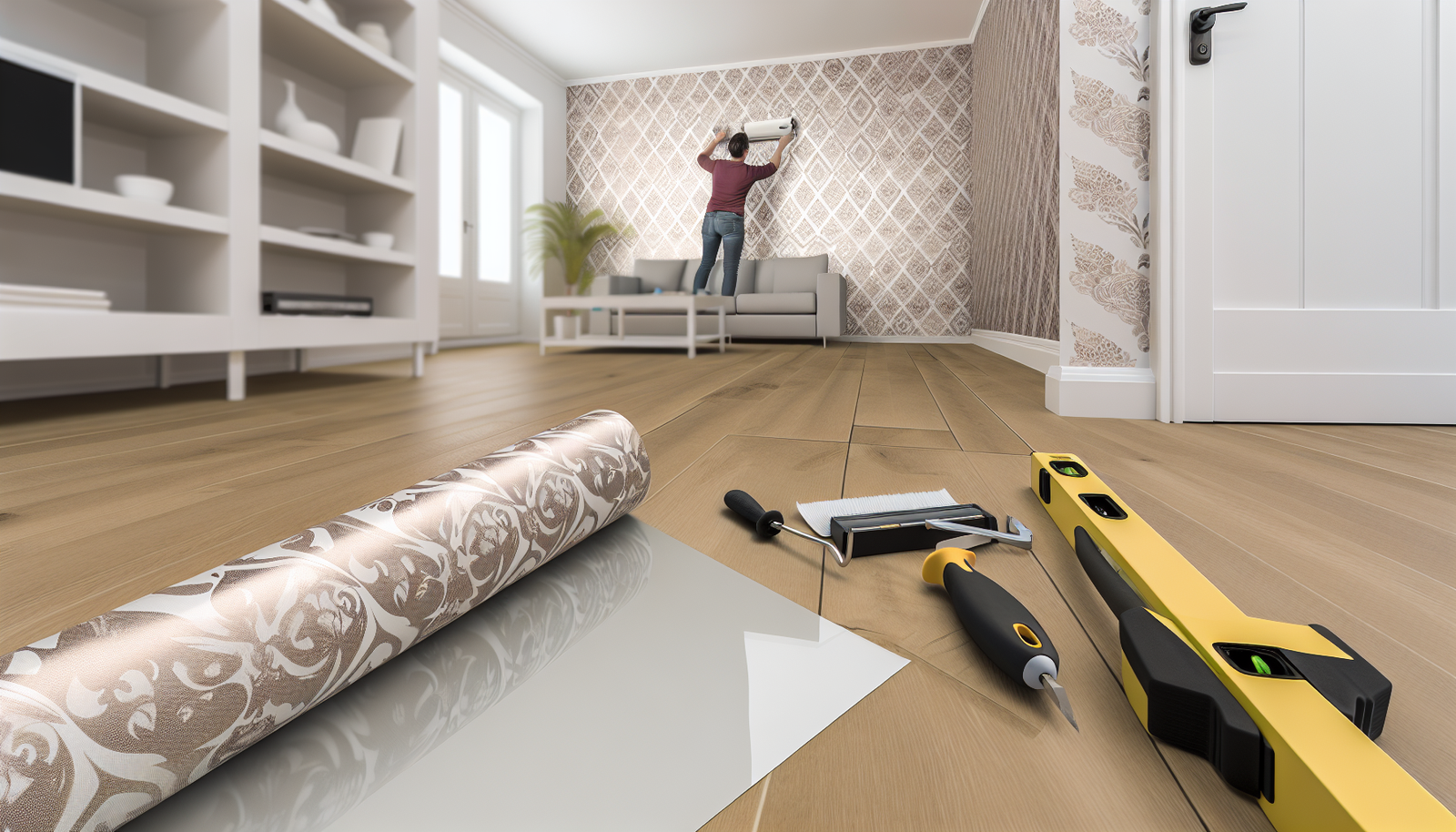
- Minimal tools required: Only a ruler, level, and utility knife usually needed; no paste or specialty gear.
- Clean project: Little to no mess—no drips, trays, or adhesive cleanup.
- Creative freedom: Try bold designs or accent walls without long-term commitment.
Limitations and Risks:
- Edge lifting can occur, especially in high-humidity rooms.
- Reduced longevity versus traditional wallpaper in wet or steamy areas—unless a suitable product is chosen.
- Surface restrictions: Adheres best to smooth, clean, properly primed walls; may not stick to textured or dirty surfaces.
- Pattern repeat challenges: Large designs may require careful alignment and extra material.
Pros & Cons Summary:
- Pro: Easy install/removal
- Pro: Renter & DIY friendly
- Con: Not for all wall types or humid rooms
- Con: Occasional edge lift or pattern mismatch
Ideal users and usage: Peel and stick wallpaper is best for renters, DIYers, accent walls, and temporary updates. It’s perfect for bedrooms, offices, or quick weekend makeovers. Avoid using on heavily textured walls, unprimed drywall, or surfaces with untested paints/sealants.
Checklist: Is peel and stick right for you?
- Smooth, clean, primed walls available?
- Looking for a quick and low-commitment update?
- Comfortable with careful measuring and light trimming?
Material Categories for Peel Stick Wallpaper
- Vinyl:
- Highly durable and water-resistant
- Ideal for kitchens, bathrooms, and high-traffic areas
- Wipe-clean surface, often scrubbable
- Thicker structure masks minor wall imperfections
- Consistently sharp, vibrant print detail
- Removable Vinyl:
- Similar to standard vinyl but uses less aggressive adhesive
- Easy to reposition and remove with minimal residue
- Balanced water resistance — best for accent walls and bedrooms
- Moderately durable; less suitable for very damp environments
- Fabric-Backed:
- Soft, textile finish for a luxurious look
- Good thickness for hiding flaws
- Breathable, making it less likely to trap moisture
- Prints less sharp than vinyl but with upscale texture
- Non-Woven:
- Composite of natural and synthetic fibers
- Strong, tear-resistant, lightweight but stable
- Some water resistance, but not fully waterproof
- Often easier to handle and install than paper options
- Paper-Based & Paper with Vinyl Coating:
- Paper core, sometimes topped with protective vinyl layer
- Lower durability and water resistance unless coated
- Best for low-humidity rooms like bedrooms and hallways
- Print clarity is excellent; thinner, so wall prep is crucial
Room Suitability
- Kitchens & Bathrooms: Opt for vinyl peel and stick wallpaper due to strong water resistance and easy cleaning.
- Bedrooms & Living Rooms: Removable vinyl, fabric-backed, or non-woven offer comfort, breathability and style.
- Hallways & High-Traffic Areas: Durable vinyl or non-woven types are best, with a focus on wipeability and toughness.
“Removable” Adhesive: What It Means
- Refers to the ability to pull off wallpaper peel and stick with minimal wall damage or residue.
- Strength can range from light tack (gentle, great for rentals) to medium or permanent (stronger grip, harder to remove).
- Manufacturers often label permanence as “removable,” “repositionable,” or “semi-permanent”—check ratings for dwell time claims and residue risks.
Peel and Stick vs. Traditional Wallpaper vs. Contact Paper
- Application: Peel and stick is self-adhesive; traditional needs paste; contact paper is thinner and for surfaces, not walls.
- Finish: Peel stick wallpaper is made for decor; contact paper is basic and utility-focused.
- Durability: Peel and stick is more durable and décor-appropriate than contact paper.
- Cost: Peel and stick costs less to install than traditional; quality types pricier than contact paper.
- Removal Impact: Peel and stick causes the least wall damage; traditional can damage walls or leave paste residue.
Reading Product Labels & Specs
- Verify surface compatibility and foundation (e.g., painted drywall, tile)
- Check scrubbability or washability ratings (crucial for kitchens/baths)
- Look for removable vs. permanent adhesive
- Assess pattern repeat measurements for matching
- Confirm roll dimensions—width, length, coverage area
Shopping Tips for Peel and Stick Wallpaper
- Order sample swatches to test appearance and adhesion
- Buy 10–15% extra for mistakes and matching patterns
- Prioritize products with trusted features: pre-trimmed selvage, clear instructions, reputable adhesive
- Choose well-known brands for consistent quality control
- Check for pre-pasted vs. pre-adhesive backing—peel stick wallpaper must specify pre-applied adhesive
Planning Measuring and Preparing Surfaces
Step-by-step Measuring Method for Peel and Stick Wallpaper:
- Measure the wall: Use a measuring tape for both height and width. For example, a 10 ft wide by 8 ft high wall.
- Account for pattern repeat and seams: Check the wallpaper roll for the pattern repeat length (e.g., 27″) and roll width (e.g., 20.5″). If the wall height (8 ft = 96″) and pattern repeat is 27″, divide 96″ by 27″ (3.55), round up to 4—multiply 4×27″=108″ (9 ft). Order enough length per strip for this adjusted height.
- Calculate number of strips per roll: A 10 ft wall (120″) / 20.5″ roll width = 5.85, so round up to 6 strips.
- Determine strip coverage per roll: If the roll is 18 ft long, 18 ft / 9 ft per strip = 2 strips per roll.
- Total rolls needed: 6 strips / 2 strips per roll = 3 rolls (always round up and order 1 extra for mistakes).
Tools and Materials Checklist:
- Squeegee or smoothing tool
- Level
- Sharp utility knife
- Measuring tape
- Pencil
- Seam roller
- Smoothing cloth
- Ladder
- Primer or adhesive promoter (if recommended)
Surface Preparation Guidance:
- Do:
- Clean all surfaces of dust and grease with soap and water, then let dry completely
- Repair holes and cracks, spackle as needed, sand smooth
- Prime or use a bonding primer if applying peel stick wallpaper to glossy, semi-gloss, or fresh paint (wait recommended curing time, often up to 4 weeks for new paint)
- Test adhesion by sticking a sample in an inconspicuous area for 48 hours
- Don’t:
- Apply wallpaper peel and stick over dust, grease, damp, or flaking paint
- Skip primer on glossy or non-porous finishes
- Install on highly textured surfaces unless specifically tested—peel and stick may not adhere well
Environmental and Timing Considerations:
- Ideal installation temperature: 65–85°F (18–29°C)
- Relative humidity: 40–60%—avoid high humidity as it inhibits adhesive
- In very cold, hot, or damp conditions, allow extra time for adhesive set and test adhesion first
Common Pre-installation Mistakes to Avoid:
- Not testing a sample—always check adhesion and removability first
- Failing to allow primer or fresh paint to cure fully—wait as manufacturer recommends
- Skipping measuring or ordering too little—calculate carefully and order extra
- Not marking a plumb line—essential for straight strip placement
Pre-installation Checklist:
- All surfaces repaired, smoothed, cleaned, and fully dried
- Primed or adhesion promoter applied where needed and cured
- Measurements taken, rolls ordered (including extra), layout planned
- All tools and materials gathered and within reach
- Environmental conditions within recommended range
Step by Step Installation and Pattern Matching
- Wall Layout and Plumb Line Marking
- Use a level to draw a vertical plumb line 1/8″ less than the width of your wallpaper peel and stick strip from a starting edge (a corner or door frame).
- This guideline ensures your first strip hangs straight—a critical base for pattern matching on adjacent strips of peel stick wallpaper.
- Align and Prepare the First Strip
- Cut your initial strip, allowing 2–3 extra inches at the top and bottom for trimming.
- Dry fit the piece, align the edge with your plumb line, then mark around outlets or protrusions lightly with a pencil if present.
- Peel Backing and Apply Wallpaper Peel and Stick
- Peel about 12” of backing from the top.
- Stick lightly to the wall, aligning the edge with the plumb line.
- Continue to peel and stick downwards, smoothing as you go to minimize bubbles and avoid wrinkles.
- Smooth and Trim
- Using a squeegee or smoothing tool, work from the center outward to push out air.
- Trim the excess wallpaper at ceiling and baseboard with a sharp utility knife, replacing blades frequently for clean cuts.
- Pattern Matching and Subsequent Strips
- Pre-cut each next strip, aligning the pattern repeat visually with the previously installed strip before peeling backing.
- Butt seams tightly for most peel and stick wallpaper—never overlap unless manufacturer specifies overlap-and-trim method.
- Adjust starting point (shift up/down) to achieve a seamless match.
- For corners, wrap wallpaper peel and stick minimally (1/8″) and start the next wall with a fresh plumb line and new piece for perfect alignment.
- Cut neatly around outlets, switches and trim by removing the plate and making small relief cuts, then use a utility knife to trim flush before replacing covers.
- Seam Handling and Final Finishing
- Firmly roll seams with a seam roller to prevent lift and ensure invisible joins.
- If bubbles appear, gently lift and reposition, or use a small needle to puncture and smooth air out.
- Inspect edges; if adhesive is too tacky, lightly dust with cornstarch till manageable.
- Corrective Actions for Mid-Install Errors:
- If a strip tears, patch with a precisely matched piece or start with a new strip for large damage.
- Misaligned pattern? Gently peel back and realign—most peel and stick surfaces are repositionable several times if done gently.
- Strong adhesive making movement difficult? Warm lightly with a hair dryer and adjust slowly.
- Safety Practices While Installing Peel Stick Wallpaper
- Use a sturdy ladder; maintain three-point contact at all times.
- Keep blades sharp and always retract/cover when not in use.
- Cut away from your body and hands.
- Collect used blades and dispose of safely in a sealed container.
- Keep tools and strips organized to prevent trip hazards.
- Post-Install Checklist
- Allow room to air out and adhesive to set for 24 hours.
- Press all seams again with the seam roller.
- Wipe surfaces gently to remove dust or fingerprints.
- Wait at least 48 hours before hanging heavy items.
- Document leftover rolls’ batch numbers for future repairs or continuation.
Maintenance Removal Troubleshooting and Design Tips
Maintenance Best Practices
- Vinyl peel stick wallpaper: Wipe gently with a damp, soft cloth weekly. For extra cleaning, use diluted mild soap—never harsh chemicals or abrasive sponges.
- Non-woven or fabric-backed wallpaper peel and stick: Dust often with microfiber. Spot clean with slightly dampened cloth; avoid over-wetting.
- Treat stains: Dab stains (do not rub) immediately with mild soap or a paste of water and baking soda for stubborn spots. Test cleaner in a hidden spot first.
- Clean high-touch areas (near switches, doors) every 2 weeks.
- Avoid scrubbing or using alcohol-based sprays, which may damage color or finish.
Removal Techniques
- Begin at a top corner; lift wallpaper gently—peel at a low angle, keeping paper close to the wall for control.
- If adhesive resists, warm the area with a hairdryer on low to soften glue while peeling slowly.
- For large sections, score the wallpaper lightly with a plastic tool and lift sections one at a time.
- Remove adhesive residue with a cloth and a solution of dish soap and warm water, or a citrus adhesive remover. Always test residue cleaner in a small, discrete area to prevent paint damage.
- Protect the underlying surface by never using metal scrapers or harsh solvents.
Troubleshooting Common Issues
- Edges lifting: Press down with a clean, warm cloth; if needed, apply a small dot of repositionable adhesive.
- Seam separation: Re-align and smooth with a seam roller.
- Adhesive transfer: Clean gently with soapy water and a soft sponge.
- Paint damage: Always test removal and avoid pulling too sharply.
- Mildew/mold in bathrooms: Ensure proper ventilation; treat affected area with a vinegar solution, dry completely before reapplying.
Repair Tips
- For small tears: Touch up with a matched patch cut from leftover peel and stick wallpaper.
- Peeled corners: Reapply with a touch of repositionable adhesive; press firmly.
- For seamless repairs: Overlap and trim patch along design lines for invisible blending.
Design and Styling Advice
- Select small patterns for cozy, small rooms; bold, large-scale patterns energize spacious areas.
- Use wallpaper peel and stick for accent walls, stripes, faux tiles, or to back open shelving.
- Mix subtle and bold patterns for eclectic looks; start with a neutral palette to reduce visual clutter.
- Trim with peel and stick borders or contrasting colors for definition.
- Match color temperature to existing lighting and furnishings for harmony.
- Kitchen: Faux tile or geometric backsplash, washable vinyl.
- Bathroom: Water-resistant designs, pattern above tile wainscoting.
- Nursery: Removable motifs, soft pastels.
- Rental Bedroom: Bold statement wall, easy-to-remove types.
- Entryway: Bright prints, welcoming stripes or botanicals.
Sustainability and Disposal
- Dispose of old peel and stick wallpaper with household waste if recycling isn’t available.
- Check with local recycling programs for vinyl or paper recycling eligibility.
- Choose low-VOC, phthalate-free products for better indoor air quality.
- Sourcing eco-friendly wallpaper peel and stick options supports healthier homes and reduced environmental impact.
FAQs
- Will peel stick wallpaper damage my paint? Usually no for sound, well-cured paint—but always test first.
- Is wallpaper peel and stick suitable for showers? Not for direct water exposure—use in dry areas or well-ventilated spaces only.
- How long does peel and stick last? Typically 2–5 years+ with proper care.
- Can I reuse peel and stick strips? Most lose adhesion after removal and aren’t designed for repeated use.
- What surfaces are best? Smooth, clean, and low-texture drywall, glass, or finished wood.
- How to handle bubbles after a few weeks? Puncture with a pin, smooth flat with a squeegee.
Conclusions
Peel-and-stick wallpaper offers flexible, affordable, and renter-friendly ways to refresh interiors without major commitment. With the right materials, careful wall prep, accurate measuring and patient installation you can achieve durable, attractive results. Learn removal methods and maintenance to protect finishes. Consider room conditions and product specifications to choose the best peel and stick solution for long-lasting style and easy updates.