
Table of Contents
Mirrors and mirror frames can completely transform a room, blending functionality with style. This article explores different types of mirrors, including wall and bathroom mirrors, as well as the materials and finishes for mirror frames — gold, black, and white. You’ll also discover tips for selecting the right mirror frames, step-by-step framing and installation guidance, sizing recommendations, and styling ideas to enhance light, scale, and decor throughout your home.
Types of Mirrors and Where to Use Them
- Wall mirrors are the most versatile mirror type, installed to add light, depth, and style anywhere from living rooms to bedrooms and hallways. Their primary function is to open up spaces visually and reflect views or artwork. The frame for mirror you choose—sleek, bold, or intricate—defines its impact. For most rooms, a wall mirror looks best when its width is about 2/3 the size of the furniture piece beneath it (for example, a 36–48 inch mirror above a 72-inch console or sofa), and hung so the center is roughly 57–65 inches above the floor. Large, framed wall mirrors work as striking focal points and multiply light from windows or lamps.
- Bathroom mirrors are usually placed above vanities and require special consideration. Vanity mirrors should match the vanity width or be a few inches narrower on each side. Standard heights are 30–36 inches, but verticality can be lengthened in tall, narrow spaces. Proper frame for mirror in bathrooms must withstand humidity—metal, lacquered wood, or composite frames excel here. Choose anti-fog glass when possible and ensure good ventilation to reduce moisture buildup. Good task lighting is critical: flank your mirror with sconces or use backlit models to avoid shadows.
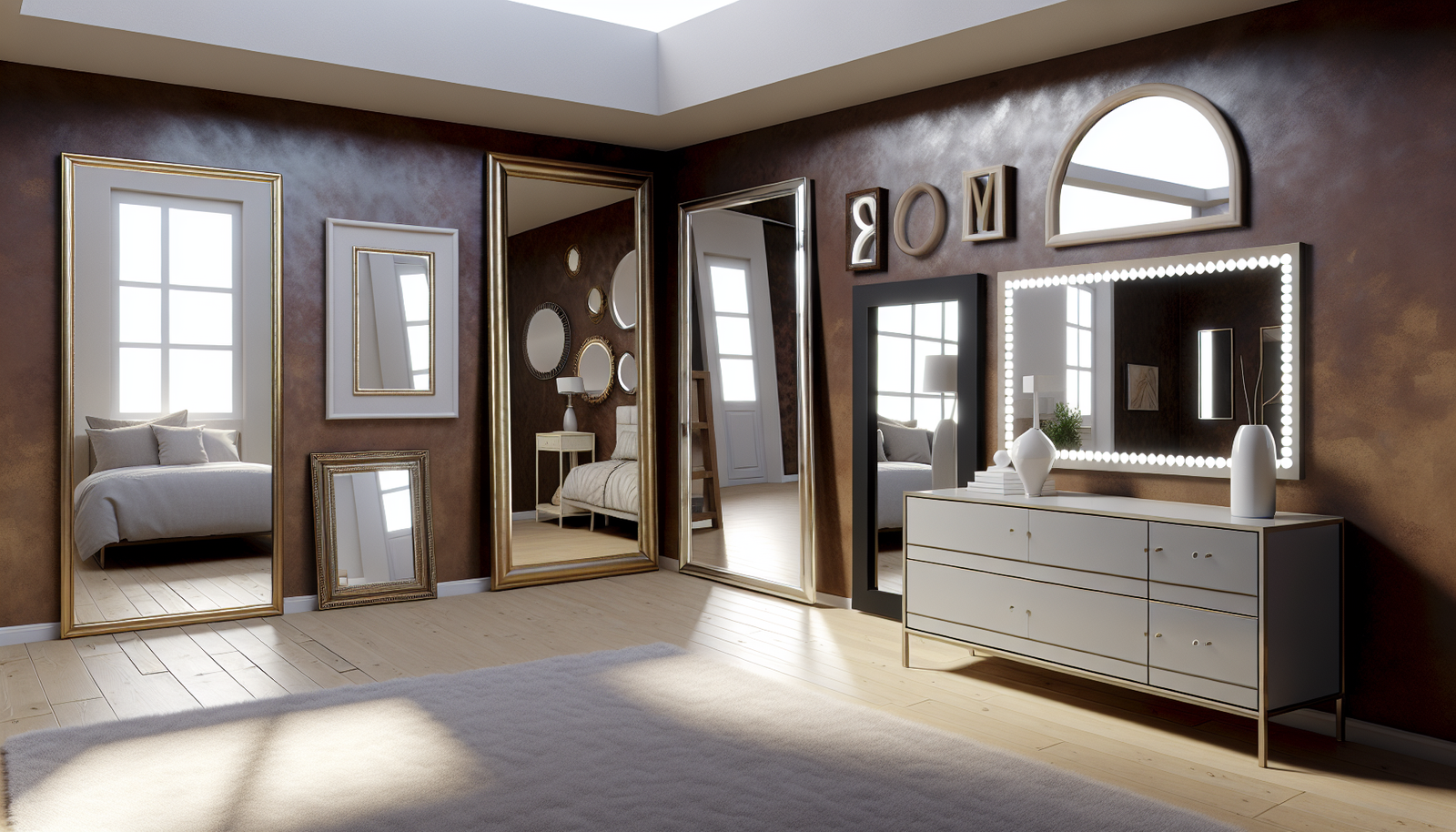
- Free-standing mirrors are ideal for bedrooms and dressing areas. These full-length mirrors (typically 60–72 inches tall) rest on the floor and lean or stand on their own. For smaller rooms, a tall framed mirror visually expands the space and provides a practical dressing solution. Position with enough backlighting to prevent dark reflections.
- Mirrored furniture and mirror bed frames add glamour and a touch of vintage Hollywood or Art Deco style. A mirror bed frame (where the headboard, footboard, or side rails incorporate mirrors) creates drama and reflects bedding, artwork, and nearby lighting. These beds work best in large, uncluttered bedrooms with streamlined decor. Avoid them in very small rooms as the effect can feel visually chaotic. Mirrored nightstands, dressers, and consoles have similar impact—finishes and frames should echo other accents like lighting or hardware for unity.
- When choosing between framed and frameless mirrors, consider your style goals. Frameless or beveled edge mirrors suit minimalist or modern interiors, visually “disappearing” and letting light play freely. Framed mirrors make a stronger statement and can be used to introduce color, metallics, or texture. For bathrooms, heat-, moisture-, and rust-resistant frames are essential.
- Shape matters: Round or oval mirrors soften strict architectural lines and are ideal for over sinks or sideboards. Rectangular and square mirrors offer maximum surface area for reflection—key for making rooms feel larger.
- Match mirror size to furniture below: aim for 2/3 width, especially above consoles, mantels, or vanities.
- Hang wall mirrors at eye level or just higher for optimal sight lines; around 57–65 inches from the floor is ideal.
- Use vertical mirrors to elongate ceilings or horizontal ones to widen narrow rooms.
- For mirror bed frames, balance with plush, textured bedding and minimal wall décor to avoid sensory overload.
- Look for fog-resistant, sealed, and easy-to-clean designs in humid rooms like bathrooms.
Examples: A gold-framed, 40-inch round wall mirror above a white console instantly brightens a foyer. A black, rectangular bathroom mirror spans a double vanity for seamless, functional elegance. A queen mirrored bed frame with a tufted headboard amplifies natural light in spacious bedrooms. Always consider wall size, furniture scale, and style preferences when selecting and placing each mirror type for maximum beauty and function.
Materials and Finishes for Frames
- Common frame materials for mirrors: When choosing a gold frame mirror, black frame mirror, or white frame mirror, the construction material underpins both aesthetic and durability. Solid wood is a premium choice, offering weight, depth, and an authentic grain—a great fit for traditional settings and larger mirror picture frames. MDF with veneer mimics solid wood at a lower cost and resists warping, ideal for high-humidity areas when sealed. Metal (aluminum or brass) brings crisp lines perfect for black frame mirrors and gold frame mirrors, and is highly durable for high-traffic spots. Resin and polyurethane mouldings offer decorative profiles at lightweight and budget-friendly prices, often used for baroque gold mirrors. DIY trim options let you customize width and finish, making it easy to match existing furniture or molding.
- Finish options and techniques:
- Gold mirrors: Real gold leaf gives artful richness and subtle variation, best in luxe or vintage applications but higher cost. Gold paint or brass plating offers uniform color, good for modern or transitional spaces. Look for subtle sheen for contemporary settings or antiqued gold for classic rooms.
- Black frame mirror: Powder-coated finishes are ultra-durable and great for modern black mirrors, while matte black gives a soft, non-reflective touch for lofts and minimal rooms.
- White frame mirror: Lacquered white feels crisp and fresh, especially in bathrooms or coastal spaces. Distressed or antiqued white frames suit farmhouse or shabby chic settings; brush techniques bring texture and warmth.
- Durability and maintenance:
- For bathroom mirrors, prioritize moisture-resistant materials (sealed wood, powder-coated metal, resin); metals should be corrosion-resistant and any gilded or painted surfaces protected by a clear finish. Dust gold leaf frames with a soft cloth only; avoid water on open-grained wood.
- Metal frames need regular wiping; white frames benefit from periodic touch-up painting to cover moisture wear or nicks.
- Frame width, profile, and depth: Select frame width and depth to balance your room’s proportions: thicker frames anchor large wall mirrors or mirror bed frames, while slimmer frames complement intricate wall galleries or tight spaces. Deep profiles enhance drama, while slimmer profiles feel light and modern—choose a bold gold frame for formal spaces, or understated black for a sleek look.
- Cost and environmental factors: Solid hardwood and genuine gilding are premium, while MDF, resin, and powder-coated metals are budget-conscious. Reclaimed wood and upcycled frames are sustainable options. Lower-VOC paints and finishes are better for indoor air quality.
- Visualizing tips:
- Pair a gilded gold frame mirror with velvet, marble, or vintage motifs for a luxe or classic style.
- Use a black frame mirror in modern bathrooms, entryways, or industrial-chic living rooms to accent geometric lines or monochrome palettes.
- White frame mirrors work in Scandinavian, farmhouse, or beachy spaces—especially when paired with rattan, pale woods, or pastel upholstery.
- Comparative pros and cons:
- Wood: Warm, customizable, but may warp with moisture (unless sealed).
- MDF: Stable, cost-effective, not as strong as hardwood for oversized mirrors.
- Metal: Sleek, waterproof, excellent for black or gold mirror; can feel cold in some rooms.
- Resin/Polyurethane: Versatile, lightweight, less robust for heavy or large mirrors but great for ornate styles.
- Suggested products: Example: West Elm’s Brass Frame Mirror (metal, gold-plated) for a modern luxe bathroom; IKEA’s NISSEDAL white frame mirror (MDF, lacquered) for an airy entryway; CB2 Infinity Black Mirror (aluminum, powder-coated) for contemporary living rooms.
How to frame a mirror step by step:
To start framing your mirror, measure its width and height carefully to ensure the mirror frames fit perfectly. Take into account any existing mounting hardware or clips by measuring from the outermost edges. If your mirror frames will overlap the glass, add an extra 1/4–1/2 inch to each side for full coverage, leaving space for clips or a backing board if needed. Select mirror frames with a profile that enhances your room’s style—thicker mirror frames create a bold statement for a gold frame in a living area, while slender black mirror frames are ideal for a sleek, modern bathroom.
Materials and tools:
- Measuring tape
- Miter saw or miter box with back saw (for accurate 45° cuts on moulding)
- Suitable frame moulding or frame kit (wood, MDF, PVC, metal, or resin—match room conditions)
- Adhesive for mirror backing (mirror-safe construction adhesive, not standard wood glue)
- Mirror clips or new mounting hardware (if securing to wall)
- Backing board (optional for extra security)
- Paints, stains, gold/black/white finishes, if customizing
- Wood filler or caulk (moisture-resistant for bath installs)
- Sandpaper (120–220 grit), finishing brush or cloth
- Protective gloves and safety glasses
Typical cost: $35–$120 depending on moulding selection and kit or custom build.
Cutting and joining the frame:
- Check your miters for accuracy before cutting the actual pieces. Cut two pairs of opposing sides at precise 45° angles.
- Dry-fit the pieces around the mirror’s perimeter to test alignment. Sand any rough or uneven cuts for a seamless miter.
- Use wood glue and clamps for wood or MDF, or plastic adhesive for resin. Reinforce corners with finish nails or corner brackets if desired. Fill seams with wood filler or caulk; let dry, then sand smooth.
- Finish as desired with paint, stain, gold leaf, or black lacquer. Allow all coatings to cure fully before assembly.
Attaching the frame:
- For surface-mount: Apply adhesive in a border to the frame’s inner edge. Press onto the mirror’s front, holding in place as recommended by the adhesive (often 5–15 minutes for initial set). Avoid squeezing glue toward the reflective surface: masking tape can support the frame as it cures.
- For surrounds: Create a rabbeted frame (a recessed edge to cradle the mirror) and carefully slot the mirror in, then secure a backing board with short screws or brads.
- Frame kits: Follow manufacturer directions to snap or click the frame picture frame into place; most grip the mirror edge firmly without tooling.
Safety tip: Always keep protective gloves on when working near glass and adhesives. Large mirrors need two people for handling.
Time estimate: 60–90 minutes, allowing for paint and glue drying.
Special considerations:
- Moisture-rich spaces: Use mold- and mildew-resistant adhesives and caulk (100% silicone preferred). Choose PVC, powder-coated metal, or high-quality sealed wood—these resist warping in damp bathrooms.
- Weight and support: Before hanging, weigh the finished mirror and refer to appropriate hanging hardware—D-rings, French cleats, heavy-duty wall anchors. For drywall, verify anchor load; for tile, use diamond drill bits and proper fasteners. Stay within safe working loads for each component.
- Troubleshooting common issues: For uneven miters, sand or recut for tight seams. If mirror flexes, reinforce with a firm backing. Warped frames may require replacement or professional help.
Professional tip: If you’re framing a valuable mirror, working with beveled glass, or unsure about your cuts or adhesives, consider hiring a glazier or carpenter for a perfect, damage-free installation.
Installation, Mounting and Bathroom Considerations
Proper mirror installation is equal parts aesthetics and safety, particularly with heavy wall mirrors, bathroom mirrors, and substantial pieces like a mirror bed frame or mirrored furniture. Each step, from wall preparation to care after mounting, ensures long-lasting beauty and function.
- Preparing the Wall and Mirror:
- Use a stud finder to locate framing or joists; mark clearly for screw placement. For drywall, toggle bolts or heavy-duty anchors (rated 50–100 lbs for medium mirrors, >100 lbs for heavy mirrors/bed frames) are essential; for tile, use carbide or diamond-tipped drill bits and appropriate tile anchors (like 3/16” or 1/4” diameter SpringToggle).
- Consider plywood backer boards if the mirror bed frame or heavy bathroom mirror will span multiple studs or if wall is hollow. This disperses weight and prevents drywall damage.
- Mounting Systems Compared:
- mirror clips: Best for small-medium wall and bathroom mirrors. Look for metal clips; plastic can crack over time. Install at all corners, tightening screws gently.
- French Cleat/Z-Bar: For large mirrors, mirror bed frames, or picture-frame mirrors. These interlocking rails (like OOK Hangman, 18–40” lengths) keep weight close to wall and allow adjustment. Use at least two screws per stud, spaced horizontally.
- D-Rings, Strap Hangers: For framed mirrors and lighter pieces. Use heavy-duty picture wire for horizontal mounting.
- Electrical and Lighting Integration:
- If your bathroom mirror includes backlighting or anti-fog pads, hire a licensed electrician for new wiring. Route power through a GFCI-protected circuit. Place sconces or strip-lights at eye level for flattering, shadow-free light.
- Low-voltage LED strips are safer for damp locations; check IP ratings for moisture.
- Moisture and Ventilation:
- In bathrooms, use stainless or zinc-plated screws and non-corrosive anchors. For gold frame mirrors, ensure lacquered or powder-coated finishes resist humidity; black frame mirrors benefit from rust-preventative primer under the surface finish.
- Caulk all frame edges with mildew-resistant silicone, especially for frame bathroom mirrors near sinks or tubs. Leave a thin gap behind glass for airflow and to avoid condensation buildup.
- Safety & Code Practices:
- Always use safety-backed glass in bathrooms and bedrooms. Check local codes for required anchor strength above vanities (often 150 lbs minimum for anchored bathroom mirrors and mirror bed frames).
- For heavy installations or mirrored furniture, consider professional installers if weight exceeds 75 lbs or if unsure of wall reinforcement.
- Post-Installation Care:
- Clean glass with ammonia-free spray and microfiber cloth to avoid streaks and protect frame finishes (for gold, black, or white frame mirrors).
- Inspect mounting hardware and anchors annually, tightening loose screws. Touch up frame chips or scratches with matching paint or touch-up markers for wood, or appropriate metal finishes.
- Stepwise Installation Check:
- Confirm fastener ratings align with the overall mirror or frame weight. (Ex: 75-lb anchor for a 60-lb mirror or at least two 50-lb anchors for a 90-lb mirror bed frame headboard.)
- Test mount stability by gently pulling at all corners. There should be zero movement, even pressure, and no visible gaps.
- Ensure all electrical, caulk, and seals are complete before regular bathroom steam exposure.
Styling Mirrors and Frames for Cohesive Interiors
Choosing the right frame for your mirror—be it a gold mirror, black mirror, or a mirror picture frame—can dramatically influence your room’s character and cohesion. Select a frame finish that echoes other metals in your space: pair a gold frame mirror with brass lamps or hardware for warmth, or a black frame mirror with matte black light fixtures or iron bed frames for a contemporary edge. Mixing metals works, but keep finishes balanced; if your console or bed frame is chrome, opt for silver or mirrored accents for visual harmony.
Gallery Arrangements and Grouping
For gallery-style layouts, combine mirrors of assorted shapes, mirror picture frames, and different frame widths for sophisticated variety. When aligning mirrors near large furniture—think bed frames or consoles—match the mirror’s width to 2/3 the width of the furniture or create visual rhythm by grouping three picture frame mirrors vertically. Hang mirrors at about eye level to connect visually with seating or bedding.
Placement for Light and Space
Expand light and space by placing a wall mirror opposite windows to reflect outdoors, or flank a gold mirror with sconces to double the brightness over a mantel. In tight entryways, a black mirror above a narrow console amplifies depth. Place a mirror behind pendant lighting or opposite statement chandeliers to enhance drama in formal dining rooms.
Bathroom Mirror Styling
For bathroom mirrors, scale is critical. In compact spaces, a vertically oriented white frame mirror brightens and elongates. For double vanities, two smaller frame bathroom mirrors prevent crowding; in larger baths, a single, wide mirror framed in gold or black adds grandeur. Layering with medicine cabinets or side lighting prevents flatness—try mounting mirrors atop half-height tiling or integrating in-wall sconces beside mirror frames.
Creative and Seasonal Accents
Mirrored bed frames or mirrored nightstands lend glamorous sparkle, especially when paired with neutral bedding and white walls. Swap out seasonal styling: hang wreaths over mirrors during holidays or drape beads and greenery for layered texture. Treat picture frame mirrors as artwork—stage them with dramatic vases or small sculptures.
Quick Styling Checklist
- Repeat a metal finish (gold, black) at least twice for cohesion.
- Group mirrors by similar color or frame style for unity, or mix intentionally for eclectic looks.
- Always align the center of the mirror within 60–66 inches from the floor unless following the sight line of adjacent furniture.
- Mirror picture frames work best when paired with art for organic gallery walls.
- Don’t over-crowd: allow at least 2-4 inches between grouped frames.
Common Mistakes to Avoid
- Mismatched frame finishes clashing with room hardware.
- Oversized mirrors above narrow furniture or vanities, causing imbalance.
- Placing mirrors where they reflect clutter or TV screens.
- Ignoring lighting—mirrors need balanced light to enhance, not harsh glares.
- Skipping wall anchors or hanging mirrors with thin wire, risking safety.
For staging images, style mirrors with layered trays, vases, or books. Angle mirrors slightly if practical to bounce light. Curate surrounding décor to repeat the frame’s tone—e.g., matte black candleholders beside a black frame mirror, or brass planters below a gold mirror for connection and warmth. For impactful results, let your mirror frame speak to your interior’s soul while weaving in comfort, balance, and light.
Conclusions
Choosing the right mirror and frame elevates both function and aesthetics in any room. From bold gold and black statement frames to simple white or picture-style surrounds, understanding materials, sizes, and proper installation methods is key. By following practical framing steps, selecting bathroom-safe options, and applying styling tips, you can confidently choose or build a frame that complements your decor and enhances light and spatial perception throughout your home.
For those interested in coordinating mirrors with bedroom furniture, consider pairing them with elegant bed frames. Learn more about selecting the perfect wooden bed frames and headboards here to create a cohesive and stylish bedroom setup.