
Table of Contents
From sleeper sofas and reclining sectionals to velvet and chenille, selecting the right sofa fabrics is essential for comfort, durability, and easy maintenance. This guide walks you through different types of sofas, sofa fabrics performance ratings, practical cleaning methods, and protective solutions, so you can choose sofa fabrics that fit your lifestyle and keep your furniture looking great for years. For additional design inspiration, check out our living room paint colors guide to perfectly complement your sofa and overall décor.
Choosing the Right Sofa Fabrics for Your Home
Key differences and use cases for sleeper sofas, sofa beds, and reclining sofas
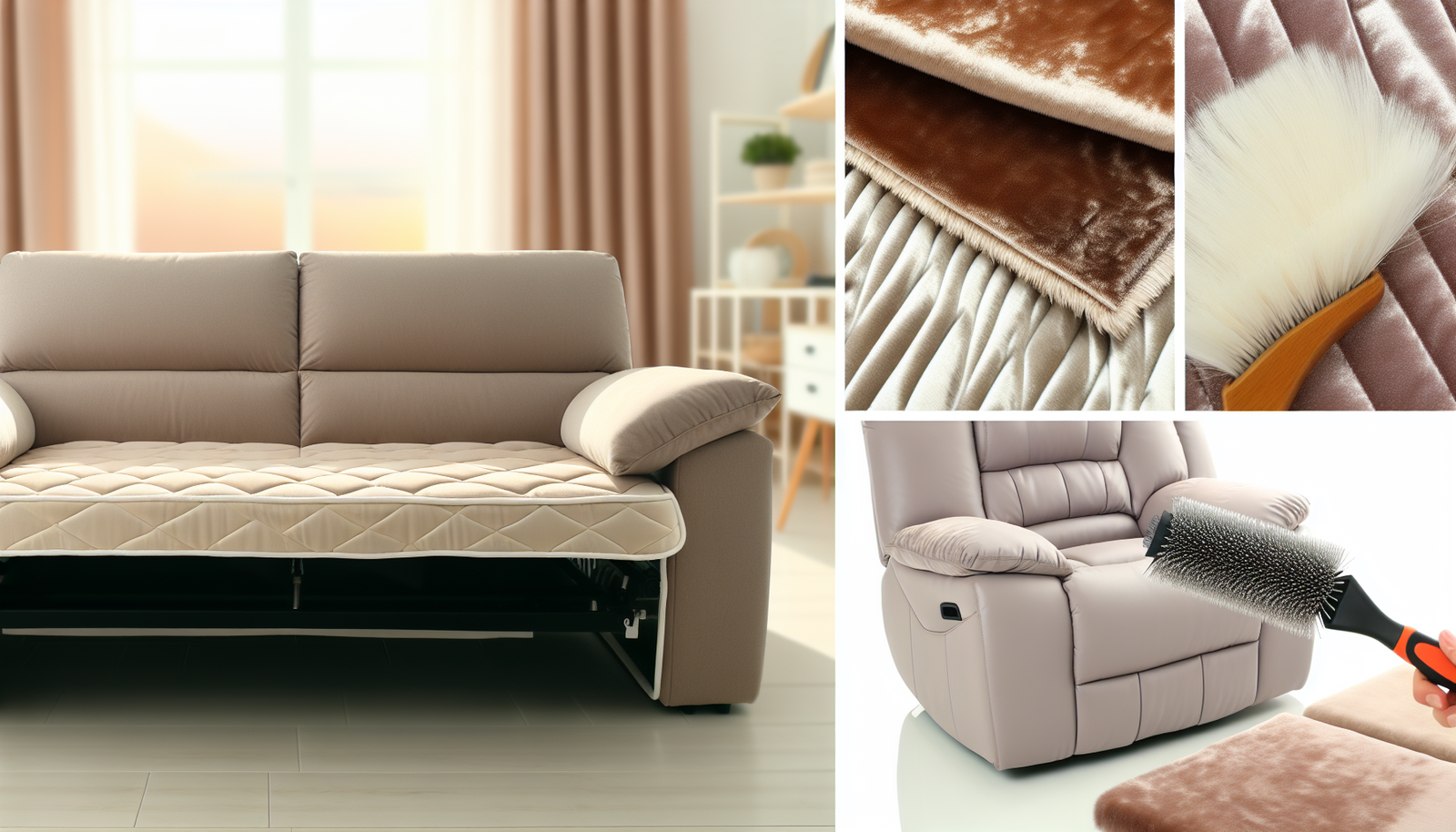
- Sleeper sofas feature full-scale mattresses stowed inside, designed for frequent overnight guests. Best for rooms doubling as guest spaces. Mechanisms include fold-out, click-clack, or trundle, with each affecting ease-of-use and daily comfort.
- Sofa beds often use a back-flip or click-clack pull-out, where the seat and back form a mattress. They’re usually firmer and lower profile than true sleepers, prioritizing compactness over support. Ideal for smaller apartments and quick sleep setups.
- Reclining sofas, either manual or power, offer relaxation with footrests and adjustable backs. These do not provide full sleep solutions, but are optimal for media rooms or family spaces emphasizing lounging.
Mattress options for sleeper sofas
- Innerspring: Traditional, supportive, and responsive, but can be heavy. Typically 4–5 inches thick, best for infrequent use.
- Memory foam: Lighter, molds to body, no pressure points. Thickness ranges 3.5–5 inches. Warmer to sleep on, works with varied upholstery.
- Air-over-coil: Hybrid of inflatable top and springs. Most portable, variable firmness, usually bulkier. Detailed fabric compatibility discussed later.
Mechanism type and upholstery implications
- Frequent folding (as with sleeper sofa beds) stresses seams, zipper covers, and cushion foams. Choose reinforced stitching and higher-resilience foams.
- Manual recliners endure pulling at lever areas; power models need upholstery that resists puckering and stretching at moving joints.
- Softer, denser fabrics like chenille or velvet can show wear faster at hinge points; performance textiles are preferable for longevity—detailed care is in a later chapter.
Measurement checklist
- Overall width and depth (frame and armrests)
- Clearance when fully extended (sleeper/bed length, reclining reach—often 70″–90″ unfolded)
- Doorways and hallways for delivery (measure tight corners, minimum 28″–36″ is typical)
- Ceiling height, especially for upright movement or tight spaces
- Leave at least 20–24″ of walking space in front or sides when fully opened
- Consider dual-purpose rooms; compact sofa beds may suit office/guestroom combos best
Buying recommendations for common scenarios
- Families with kids: Performance fabric sleeper with memory foam; stain-resistant cover for nightly spills.
- Pet owners: Reclining sofa in tight weave performance fabric; avoid chenille and velvet which catch fur.
- Small apartments: Compact sofa bed (click-clack) in microfiber; easy transformation and limited footprint.
- Frequent guests: Queen-size sleeper sofa with innerspring or memory foam mattress; prioritize durable mechanisms.
Quick decision checklist
- Daily guests/dual use: Sleeper sofa, memory foam, performance fabric
- Small space/flex use: Sofa bed (click-clack), medium-firm foam, microfiber
- Lounging/family TV: Power recliner, high-density foam, stain-resistant performance fabric
- Pets/kids: Sofa with removable cover, synthetic woven fabric, easy-clean finish
Refer to the next chapter for a deep dive on fabric performance ratings and how to match upholstery to your lifestyle.
Decoding sofa fabrics performance ratings and durability
Performance fabric describes engineered upholstery materials with enhanced durability, stain and fade resistance—often by weaving synthetic fibers tightly or using advanced coatings. Notable types:
- Solution-dyed acrylic: Color pigments are infused into liquid fiber before spinning, ensuring superior UV resistance and colorfastness.
- Olefin (polypropylene): Lightweight, highly stain- and mildew-resistant, naturally repels moisture, and ideal for heavy-use or sun-rich spots.
- Polyester microfiber: Extra-fine, tightly woven fibers fend off spills and resist pilling, while mimicking plush textures (suedes, velvet-like finishes).
- Fabric backing: The secondary layer stabilizing upholstery, adding structure and reducing stretch or sag—critical for intense or repetitive motion (e.g., sleeper/sofa beds, recliners).
- Colorfastness: The ability of a fabric to retain color after exposure to light, washing, or abrasion. Solution-dyed synthetics rank highest; natural fibers may fade faster.
- Pilling: The formation of surface fuzz or “pills” from friction. Tight weaves, microfiber, and certain performance synthetics minimize the risk compared to open weaves or chenille.
- Abrasion testing: Simulates wear by rubbing fabric in controlled cycles.
- The double rubs (Wyzenbeek test) method is the standard for U.S. upholstery. One “double rub” means back-and-forth motion counts as one cycle. 15,000–30,000 double rubs are typical for moderate residential use; 30,000–100,000+ indicate heavy-duty suitability.
- Martindale cycles (European): Circles a disc against the fabric until wear is detected. 25,000 Martindale cycles generally equate to robust residential durability; above this is considered for contract or heavy-use zones.
- Cleaning codes help guide safe maintenance:
- W: Water-based cleaners permitted—good for spills or regular soil with gentle soap and water.
- S: Use solvent-based cleaners (no water)—needed for sensitive fibers or nap finish (velvet, chenille).
- WS: Safe for either water-based or solvent cleaning.
- X: Vacuum only—no liquids; very delicate, best avoided in high-use or family settings.
Codes matter for practicality: busy homes or pet owners benefit from W or WS fabrics, while S or X require specialized products or professional care.
- Performance vs. natural fibers:
- Stain resistance: Performance synthetics and treated fibers outperform cotton/linen blends, making them superior for kids, dining, or pet traffic.
- UV fade resistance: Solution-dyed acrylics/olefins offer top resistance; natural fibers fade noticeably with sunlight.
- Breathability: Natural fibers often “breathe” better; performance options are improving.
- Feel: Modern synthetics can be exceptionally soft (microfiber, chenille); velvet can be both natural or synthetic blend based.
- Choosing by household needs:
- For high-traffic, kids, or pets, insist on 25,000+ double rubs, W/WS code, and proven colorfastness (ask about solution-dyed or fade warranties).
- For recliners or convertible sofas, require strong fabric backing to prevent stretching or seam splits.
- Darker, textured (but not loose-pile) fabrics better mask stains, paw prints, or wear.
- Retailer questions checklist:
- What is the abrasion (double rub/Martindale) rating?
- Cleaning code and recommended cleaning method?
- Fade/wear warranty coverage?
- Can you provide a swatch for in-home testing? (check against sunlight, pets, spills)
Chenille velvet and common upholstery fabrics compared
Chenille
- Composition & Weave: Woven from cotton, polyester, or rayon with fuzzy, caterpillar-like yarns projecting from a velvety ground, producing a distinct, rippled surface.
- Performance: Sits in the 15,000–30,000 double rub range, offering moderate durability. Pile is soft but can flatten with heavy use, and chenille may pill, especially with poly blends. Color depth is high but can fade in direct sunlight.
- Pros/Cons: Exceptionally plush and warm, minimizes pet toenail marks, but snags and velvety tracking are common. Shows pet fur more than smoother fabrics. Prone to water staining and dye transfer.
- Care Notes: Vacuum gently, brush pile occasionally; blot stains—avoid aggressive wet cleaning. Detailed care guidance follows in the cleaning chapter.
- Best Uses: Cozy living rooms, sofa beds needing tactile appeal, reading nooks; avoid high-traffic or pet zones.
Velvet
- Composition & Weave: Cut pile, often cotton, polyester, or silk, with densely packed short fibers standing upright for a luminous sheen. Velvet’s nap can change in appearance with touch and light.
- Performance: Ratings usually 15,000–40,000+ double rubs. Resilient yet sensitive to crushing or water spots; colors appear vibrant but may show pressure marks and develop shiny “seating clouds.”
- Pros/Cons: Striking luxury; less pet-hair clinging than chenille, but exposes spills, bruises, and finger marks. Can snag, especially low-end varieties. Prone to color shifts and pile direction changes.
- Care Notes: Brush gently, vacuum without beater bar; use minimal moisture if spot cleaning.
- Best Uses: Formal lounges, guest rooms, statement pieces; best for low-traffic, adult-oriented spaces.
Microfiber
- Composition & Weave: Fined-down polyester, woven tight for leather-like feel or sueded effect. No pile, ultra-smooth face.
- Performance: Highly durable (upward of 50,000 double rubs common), resists pilling, water, and stains, excellent colorfastness, hypoallergenic.
- Pros/Cons: Low pet hair visibility, easy to wipe down; static can attract lint. Limited risk of snagging.
- Care Notes: Most allow water-based cleaning; vacuum and blot stains promptly.
- Best Uses: Family rooms, sleeper sofas, pet/kid households, furnished rentals.
Linen Blends
- Composition & Weave: Pure linen or mixed with cotton or polyester for strength, plain or slub weave, subtle texture.
- Performance: Moderate abrasion resistance (8,000–15,000 double rubs for pure, higher with blends), prone to wrinkling and fading; breathes well, can soften but may pill with wear.
- Pros/Cons: Elegant casual look, cool in hot climates; attracts stains, pet claws can snag threads, can look rumpled.
- Care Notes: Most blends spot-clean or dry-clean only; avoid over-wetting.
- Best Uses: Occasional seating, airy living rooms, or relaxed, pet-free environments.
Cotton Blends
- Composition & Weave: Cotton fibers blended with polyester or rayon for softness, woven in twill, canvas, or basketweave.
- Performance: Generally 12,000–25,000 double rubs, infrequent pilling, moderate fade resistance, soft hand, breathable.
- Pros/Cons: Family-friendly, versatile; accepts stains more easily, absorbs dyes, may shrink with improper cleaning.
- Care Notes: Most blends water-cleanable, gentle cycle for slipcovers when permitted.
- Best Uses: Everyday sofas, slipcovers, casual spaces where laundering is prioritized.
Leather
- Composition & Weave: Top or full grain cowhide, with natural pore structure; smooth, firm hand.
- Performance: Extremely durable (outlasts most textiles), develops patina, resists pilling and dye transfer but can scratch, temperature sensitive, initially cool to touch.
- Pros/Cons: Nearly pet-proof, hypoallergenic, wipes clean; prone to age cracks, limited color range, expensive, can feel cold or sticky.
- Care Notes: Wipe with damp cloth, condition regularly; prevent sharp object contact.
- Best Uses: High-use family rooms, reclining sofas, allergy-prone homes, executive offices.
Faux Leather
- Composition & Weave: Polyurethane or vinyl over woven backing, designed to mimic natural leather’s look.
- Performance: Durable (25,000–50,000 double rubs), waterproof, scratch-resistant, colorfast but can peel or crack with age; less breathable than real leather.
- Pros/Cons: Budget-friendly, vegan, easy to clean; doesn’t patina, temperature/comfort limits, can feel sticky.
- Care Notes: Wipe with damp cloth, mild cleaner; protect from abrasion/heat.
- Best Uses: Dorms, kids’ rooms, rental properties, pet spaces on a budget.
Chenille vs Velvet—Aesthetics & Maintenance Trade-off Quick List:
- Chenille: Textured beauty, warmer, better at masking day-to-day marks, but more prone to snagging and showing crushed pile.
- Velvet: Timeless glamour, glossier, crisper color, less lint/pet hair, but distinctly highlights pressure marks and requires gentler care.
Example Scenarios:
- Dog-friendly living room: Choose microfiber—lowest pet hair retention, resists staining/snagging, maintains look through frequent cleaning.
- Elegant reading corner: Opt for chenille—superior tactile warmth, cozy for lounging, forgiving to light wear, easy to blend in décor.
Transitioning into the cleaning and maintenance chapter, the following recommendations for each fabric’s care will clarify safe routines and spot treatment pitfalls to extend your sofa’s life regardless of chosen upholstery.
How to clean and maintain sofa fabrics safely and effectively
Always check your sofa fabrics care label and spot-test any cleaners on a hidden area before full application. Some sofa fabrics, especially chenille and velvet, can discolor or shrink unexpectedly. Never rely on a one-size-fits-all approach—always follow the manufacturer’s guidance to protect your sofa fabrics and preserve warranties and fabric integrity.
Routine Maintenance Schedule:
- Vacuum weekly using a soft brush attachment—pay attention to seams, crevices, and under cushions to lift dust, pet hair, and crumbs.
- Rotate and flip cushions monthly (if possible) to ensure even wear and prevent permanent compression.
- Air out cushions periodically by setting them upright or in sunlight (avoid direct sun for velvet or dark chenille due to fading risk).
- Inspect seams and buttons every few weeks for loose threads or shifting—address issues promptly to avoid rips.
Spot-Cleaning by Cleaning Code:
- W: Mix 1/4 tsp mild soap (like dish liquid) in 1 cup lukewarm water. Dip a white cloth in solution, wring almost dry, and blot stain—never rub. Rinse with another damp cloth, then blot dry with a towel.
- S: Use a designated solvent (clear alcohol or foam upholstery cleaner), applying it sparingly with a cloth. Ventilate well and keep away from flame. Gently blot, then let air-dry – do not oversaturate.
- WS: Try water-based cleaner first; for tougher stains, use solvent, always testing either before full application.
- X: Vacuum only — for stains, call a professional to avoid water rings and fabric damage.
Stain-Specific Guidance:
- Food/Oil: Blot excess immediately. Dab with diluted dish detergent (“W” or “WS”), repeat as needed, then rinse. For “S”, use cleaner suited for oil.
- Wine: Blot with dry cloth, then with diluted vinegar or club soda (“W/WS”); for “S”, try a little rubbing alcohol.
- Ink: Apply a cotton swab of isopropyl alcohol, dab, and repeat using fresh parts of the swab; call a pro if stain persists.
- Pet Urine: Blot, then use enzyme cleaner (safe for “W/WS” only). “S” requires solvent spot remover, never water.
- Grease: Sprinkle with baking soda, let sit 15 mins, vacuum up, then treat as above for “S” or “W” codes.
Deep Cleaning Methods & Cautions:
- Steam cleaning or upholstery shampoo machines are suitable only for “W/WS” fabrics—never for velvet, chenille, “S,” or “X.”
- For chenille or velvet, improper moisture or heat can crush pile—prefer professional hot-water extraction for tough cases.
- Always brush velvet and chenille gently (with a soft clothes brush) after cleaning to maintain pile direction and prevent matting.
Odor & Drying:
- Deodorize with a sprinkling of baking soda; leave for 30 minutes, then vacuum. For pet odors, use enzyme sprays safe for your fabric code.
- After any cleaning, allow full air circulation or fan-assisted drying; avoid direct sun and heat to prevent shrinking and mildew—velvet and chenille must dry thoroughly and be gently brushed to restore texture.
Emergency Quick-Reference Checklist:
- Check fabric cleaning code first.
- Test any cleaning solution on a hidden area.
- Blot, don’t rub stains—work from outside edge inward.
- Use only recommended cleansers and cloths.
- For velvet/chenille: brush pile after drying.
- Call a professional for ink, stubborn stains, or “X/S” code confusion.
- Dry fully before replacing cushions or covering.
Protecting and prolonging sofa life with covers and smart care
Effective protection and care strategies can substantially extend the useful life and appearance of every type of sofa, whether sleeper sofa, reclining sofa, or high-use family sofa beds. Slipcovers are a smart line of defense:
- Stretch fitted covers: Made from elastane or spandex blends, these work best for standard-shaped sofas, offering a sleek fit. Pros: Easy to apply, machine-washable, cost-effective. Cons: Don’t suit all styles or larger arms, may shift during use.
- Tailored covers: Custom-made or semi-fitted, better for unique sofa shapes or high-end designs like velvet sofa fabric. Pros: Superior fit, maintains appearance, available in many fabrics—including washable cotton, linen, microfiber. Cons: Pricier, longer lead times.
- Waterproof covers: Polyurethane-backed or silicone-lined, perfect for families or pets. Pros: Shields against spills and pet accidents. Cons: Can feel less breathable or stiffer; best for temporary or targeted use.
- Zip-on and modular covers: Replaceable sectional or seat covers, allow part-by-part cleaning. Pros: Changeable, convenient for heavy-use zones (like sleeper sofa mattresses). Cons: Compatibility and matching dye-lots sometimes tricky.
To measure for a cover, follow these steps:
- Measure overall width (arm to arm) at the sofa’s widest point.
- Measure the seat depth and height (base to top of backrest).
- Include arm width/height and cushion thickness for fitted styles.
- Beware: Common mistakes include overlooking bulky arms, pillow-back protrusions, or recliner levers—always measure with all features fully extended where applicable.
A cover is ideal for busy homes, rental properties or delicate upholstery (like chenille fabric or velvet sofa fabric); performance fabric sofas are best for those seeking permanent, integrated protection in high-traffic zones—especially recliners and sofa beds. Choose based on wear, cleaning code, and exposure (kids, pets, or food).
- Fabric protector sprays: Coat fibers to repel stains and spills; reapply every 6-12 months. Always use in a well-ventilated area and patch test on a hidden corner first. Note, effects diminish with washing and heavy use; not foolproof for deep-staining liquids or oils.
For ongoing sofa health:
- Rotate slipcovers/cushions every season.
- Schedule a deep-clean biannually (see previous chapter for cleaning codes and methods).
- Repair tiny tears when first noticed to prevent spreading.
- Fluff or replace foam inserts if cushions sag, and reinforce seams at high-stress points.
Reupholstering or professional repair is due if you spot: fabric thinning, stubborn stains, foam breakdown, or seam separation. Key questions for your upholsterer:
- What washable, high-resistance fabrics can you offer (performance lines, chenille, velvet)?
- Can you upgrade the cushion foam density?
- What is the total cost estimate vs. buying new?
Immediate protection checklist for new sofas:
- Order a quality fitted or tailored cover matching your sofa style.
- Request a performance fabric or removable cover sample.
- Apply a tested fabric protector spray and note expiration/reapplication dates.
- Schedule first professional or deep clean within six months.
- Keep sofa out of direct sunlight and rotate placement if possible.
Conclusions
Choosing the right sofa fabrics combines function, durability, and practical maintenance. Selecting high-quality sofa fabrics and well-designed upholstery reduces long-term costs for families and pet owners. Regular cleaning and care, following W/S/WS/X codes, helps your sofa fabrics last longer. Protective covers and performance-tested sofa fabrics with strong double-rub ratings ensure heavy-use areas stay in great condition. With thoughtful choices in sofa fabrics and consistent care, you’ll enjoy comfort, style, and lasting longevity.